Wednesday, December 30, 2015

Canada Military News: Glorious History of Ancient Syria.... why it matters and why vicious ISIS -Islamic State must NOT be allowed to destory it completely/Glorious history deserves respect -as WWII baby raised to relish Canada's history and global and our own identity of where we all came from/Canada is very young 10,000 years (ice age)- Syria is very old over 700,000 years old...


SHORT OVERVIEW OF THE HISTORY
OF ANCIENT PRE-HELLENISTIC SYRIA


Palaeolithic and first occupation


Earliest evidence of hominid presence in Syria dates back to about c. 700,000 years ago, when the first crude stone tools are being found. Neanderthal occupation is suggested by bones found at sites such as Dederiyeh Cave near Aleppo. Around 100,000 years, the great migrations of Anatomically Modern Humans replace Neanderthals in Levantine area. Climatic changes c. 15,000 years ago pushed humans in the Near East to the adoption of new occupation and food-procuring strategies.

Neolithic developments and Uruk presence in Syria


Around 10,000 years ago, the adoption of agriculture marks the all-important transition into Neolithic. Syria witnesses the emergence of the first Pre-Pottery Neolithic cultures in the Near East, including famous sites such as Mureybet and Abu Hureyra, created by sedentary populations with increasing dependence on food-producing systems. The advent of pottery c. 6,500 years ago, visible at sites such as Mureybet, is then (c. 4,500) follwed by the appearance of large, urban sites adhering to the traditions of Mesopotamian ‘Ubaid and Uruk cltures. Early urban sites in Syria include Tell Brak and Tell Mashnaqa.

Early Bronze Age polities


In the mid-3rd millenium BC, Syria witnesses the appearance of large urban sites and whole state systems. At first believed to be an extension of the Mesopotamian culture, the most prominent sites of Ebla and Mari rather suggest an indigenous process of formation of a state governed by a literate elite. Mesopotamian and Egyptian influences are visible in art, writing and religoious iconography. Syria can be thus considered as a cradle of one of the earliest known human civilisations.

Akkadian Occupation and Amorite kingdoms


Syrian kingdoms fall prey to the newly-fromed Akkadian empire in the late 3rd millenium BC. Although foreign administration and Akkadian writing system are imposed on Syrian cities, local artistic styles as well as religious traditions and dialects continue to thrive. The waning power of the Sargonic dynasty made way to the rise of Amorites, a Semitic people who occupied, from the begining of the 2nd millennium BC, large parts of Syria, including cities such as Mari. After a brief breakdown in urban tradition, the glory of cities such as Brak and Ebla was rejuvenated by the rise, first of the Hurrian-speaking Mittanian Empire (1500-1300 BC), then of the Middle Assyrian Empire (1350-1000 BC).

Iron Age and the Great Empires


At the beginning of the 12th century BC, the balance of power in the eastern Mediterranean is upset by the advent of the Sea Peoples. This series of migrations causes some states (e.g. Hittite and Mittanian Empires, Mycenean Greece) to collapse, while others (e.g. Egypt Middle Assyrian Empire) significantly dwindle in power. Syria then experiences the emergence of competing principalities, sometimes described as Neo- or Syro-Hittite. Neo-Hittite kings, speaking either Luwian or Aramaic languages, draw heavily from the artistic and architectural traditions of the fallen Hittite empire, which is visible in the Early Iron Age levels of sites like Aleppo and Carchemish. A majority of the independent Luwian-Aramaean polities is then subdued by the Neo-Assyrian Empire (900-609 BC), which later falls prey to Nebuchadnezzar of Babylon and finally Cyrus of Achaemenid Persia.


Partially adapted from P.M.M.G. Akkermans & G.M. Schwartz 2003 The archaeology of Syria : from complex hunter-gatherers to early urban societies (c. 16,000-300 BC), Cambridge: CUP
http://cdli.ucla.edu/collections/syria/history_of_syria_en.html


---------------

About the Ancient Area of Greater Syria

Syria From the Bronze Age to Roman Occupation


Map of Ancient Syria - Public Domain. Samuel Butler Atlas of the Ancient and Classical World (1907/8).
Map of Ancient Syria.  Public Domain. Samuel Butler Atlas of the Ancient and Classical World (1907/8).

A Desirable Location - At the Crossroads

Greater Syria Covered Several Modern Nations

In antiquity, the Levant or Greater Syria, which includes modern Syria, Lebanon, Israel, Palestinian territories, part of Jordan, and Kurdistan, was named Syria by the Greeks. At the time, it was a landbridge connecting three continents. It was bounded by the Mediterranean on the west, the Arabian Desert on the south, and the Taurus mountain range to the north.
The Syrian Ministry of Tourism adds that it was also on the crossroads of the Caspian Sea, the Black Sea, the Indian Ocean, and the Nile. In this vital position it was the hub of a trade network involving the ancient areas of Syria, Anatolia (Turkey), Mesopotamia, Egypt, and the Aegean.

Ancient Divisions

Ancient Syria was divided into an upper and lower section. Lower Syria was known as Coele-Syria (Hollow Syria) and was located between the Libanus and Antilibanus mountain ranges. Damascus was the ancient capital city. The Roman emperor known for dividing the emperor into four parts (the Tetrarchy) Diocletian (c.
245-c. 312) established an arms manufacturing center there. When the Romans took over, they subdivided Upper Syria into multiple provinces.
Syria came under Roman control in 64 B.C. Romans emperors replaced the Greeks and Seleucid rulers. Rome divided Syria into 2 provinces, Syria Prima and Syria Secunda. Antioch was the capital and Aleppo the major city of Syria Prima. Syria Secunda was divided into two sections, Phoenicia Prima (mostly modern Lebanon), with its capital at Tyre, and Phoenicia Secunda, with its capital at Damascus.

Important Ancient Syrian Cities

Doura Europos
The first ruler of the Seleucid dynasty founded this city along the Euphrates. It came under Roman and Parthian rule, and fell under the Sassanids, possibly through an early use of chemical warfare. Archaeologists have uncovered religious venues in the city for practitioners of Christianity, Judaism, and Mithraism.
Emesa (Homs)
Along the Silk Route after Doura Europos and Palmyra. It was the home of the Roman emperor Elagabalus.
Hamah
Located along the Orontes between Emesa and Palmyra. A Hittite center and capital of the Aramaean kingdom. Named Epiphania, after the Seleucid monarch Antiochus IV.
Antioch
Now a part of Turkey, Antioch lies along the Orontes River. It was founded by Alexander's general Seleucus I Nicator.
Palmyra
The city of palm trees was located in the desert along the Silk Route. Became part of the Roman Empire under Tiberius. Palmyra was the home of the third century A.D Roman-defying queen Zenobia.
Damascus
Called the oldest continually occupied city in the word and is the capital of Syria. Pharaoh Thutmosis III and later the Assyrian Tiglath Pileser II conquered Damascus. Rome under Pompey acquired Syria, including Damascus.
Decapolis
Aleppo
A major caravan stopping point in Syria on the road to Baghdad is in competition with Damascus as the oldest continually occupied city in the world. It was a major center of Christianity, with a large cathedral, in the Byzantine Empire.

Early Contacts

Syrian Natural Resources

The major ethnic groups that migrated to ancient Syria were Akkadians, Amorites, Canaanites, Phoenicians, and Arameans.
To the fourth millennium Egyptians and third millennium Sumerians, the Syrian coastland was the source of the soft woods, cedar, pine, and cypress. The Sumerians also went to Cilicia, in the northwest area of Greater Syria, in pursuit of gold and silver, and probably traded with the port city of Byblos, which was supplying Egypt with resin for mummification.
For additional information, see:
"Literary Sources for the History of Palestine and Syria: Contacts between Egypt and Syro-Palestine during the Old Kingdom," by Mary Wright; Dennis Pardee. The Biblical Archaeologist, Vol. 51, No. 3. (Sep., 1988), pp. 143-161.
"Egypt and the East Mediterranean from Predynastic Times to the End of the Old Kingdom," by William A. Ward. Journal of the Economic and Social History of the Orient, Vol. 6, No. 1. (May, 1963), pp. 1-57.

Ebla

The trade network may have been under the control of the ancient city Ebla, an independent Syrian kingdom that exerted power from the northern mountains to Sinai. Located 64 km (42 mi) south of Aleppo, about halfway between the Mediterranean and the Euphrates. Tell Mardikh is an archaeological site in Ebla that was discovered in 1975. There archaeologists found a royal palace and 17,000 clay tablets. Epigrapher Giovanni Pettinato found a Paleo-Canaanite language on the tablets that was older than Amorite, which had previously been considered the oldest Semitic language. Ebla conquered Mari, capital of Amurru, which spoke Amorite. Ebla was destroyed by a great king of the southern Mesopotamian kingdom of Akkad, Naram Sim, in 2300 or 2250. The same great king destroyed Arram, which may have been an ancient name for Aleppo.
For more on Ebla, see
"Literary Sources for the History of Palestine and Syria: The Ebla Tablets," by Lorenzo Viganò; Dennis Pardee. The Biblical Archaeologist, Vol. 47, No. 1. (Mar., 1984), pp. 6-16.
"The Royal Archives of Tell Mardikh-Ebla," by Giovanni Pettinato. The Biblical Archaeologist, Vol. 39, No. 2. (May, 1976), pp. 44-52.

Accomplishments of the Syrians

The Phoenicians or Canaanites produced the purple dye for which they are named. It comes from mollusks that lived along the Syrian coast. The Phoenicians created a consonantal alphabet in second millennium in the kingdom of Ugarit (Ras Shamra). They brought their 30-letter abecedary to the Aramaeans, who settled Greater Syria at the end of the 13th century B.C. This is the Syria of the Bible. They also founded colonies, including Carthage on the north coast of Africa where modern Tunis is located. The Phoenicians are credited with discovering the Atlantic Ocean.
The Aramaeans opened trade to southwest Asia and set up a capital in Damascus. They also built a fortress at Aleppo. They simplified the Phoenician alphabet and made Aramaic the vernacular, replacing Hebrew. Aramaic was the language of Jesus and the Persian Empire.

Conquests of Syria

Syria was not only valuable, but vulnerable, since it was surrounded by many other powerful groups. In about 1600, Egypt attacked Greater Syria. At the same time, Assyrian power was growing to the east and Hittites were invading from the north. Canaanites in coastal Syria who intermarried with the indigenous people producing the Phoenicians, probably fell under the Egyptians, and the Amorites, under the Mesopotamians.
In the 8th century B.C., the Assyrians under Nebuchadnezzar conquered the Syrians. In the 7th century the Babylonians conquered the Assyrians. The next century, it was the Persians. At the death of Alexander, Greater Syria came under the control of Alexander's general Seleucus Nicator, who first established his capital on the Tigris River at Seleucia, but then following the Battle at Ipsus, moved it into Syria, at Antioch. Seleucid rule lasted for 3 centuries with its capital at Damascus. The area was now referred to as the kingdom of Syria. Greeks colonizing in Syria created new cities and expanded trade into India.

Sources:

The Library of Congress - SYRIA - A Country Study, Data as of April 1987
Supplemental: [www.syriatourism.org/] Syria - Ministry of Tourism
Syrian Cities
A Manual of Geographical Science: Ancient Geography, by W. L. Bevan (1859).


http://ancienthistory.about.com/od/syria/qt/110607Syria.htm


----


___ History of Syria

HISTORICAL BACKGROUND

Present-day Syria is only a small portion of the ancient geographical Syrian landmass, a region situated at the eastern end of the Mediterranean Sea from which Western powers created the contemporary states of Syria, Lebanon, Jordan, and Israel in the post-Ottoman era of the early twentieth century. Greater Syria, as historians and political scientists often refer to this area, is a region connecting three continents, simultaneously cursed and blessed as a crossroads for commerce and a battleground for the political destinies of dynasties and empires. Exploited politically, Greater Syria also has benefited immeasurably from the cultural diversity of the people who came to claim parts or all of it, and who remained to contribute to the remarkable spiritual and intellectual flowering that characterized Greater Syria’s cultures in the ancient and medieval periods. Throughout history, Greater Syria has been the focal point of a continual dialectic, both intellectual and bellicose, between the Middle East and the West. Today, Syria remains an active participant in the trials and tribulations of a troubled and volatile region.

Early History

Since before 2000 BC, Syria has been an integral part of, or the seat of government for, powerful empires. The struggle among various indigenous groups as well as invading foreigners resulted in cultural enrichment and significant contributions to civilization, despite political upheaval or turmoil. The ancient city of Ebla existed at the center of an expansive empire around 2400 B.C. The chief site, unearthed in the vicinity of Aleppo in the 1970s, contained tablets providing evidence of a sophisticated and powerful indigenous Syrian empire that was involved with, and probably controlled, a vast commercial network linking Anatolia (today part of Turkey), Mesopotamia (an ancient region of southwestern Asia in present-day Iraq), Egypt, and the Aegean and Syrian coasts. The language of Ebla is believed to be the oldest Semitic language, and the extensive writings of the Ebla culture are proof of a brilliant culture that rivals those of the Mesopotamians and ancient Egyptians.

After the King of Akkad (Mesopotamia) destroyed Ebla, Amorites ruled the region until their power was eclipsed in 1600 B.C. by the Egyptians. The following centuries saw Syria ruled by a succession of Canaanites, Phoenicians, Hebrews, Aramaeans, Assyrians, Babylonians, Persians, Greeks, Seleucids, Romans, Nabataeans, Byzantines, Muslim Arabs, European Christian Crusaders, Ottoman Turks, Western Allied forces, and the French. Although Syria has absorbed the legacies of these many and varied cultures, the very existence of this string of foreign dominating powers exemplifies the political, economic, and religious importance of Syria’s strategic location.

Highlights of early Syrian history include the impact made by such dominant powers as the Phoenicians, Aramaeans, and Greek, Roman, and Byzantine Empires. During the second millennium B.C., the seafaring Phoenicians established a trade network among independent city-states and developed the alphabet. The Aramaeans, overland merchants who had settled in Greater Syria at the end of the thirteenth century B.C., opened trade to southwestern Asia, and their capital at Damascus became a city of immense wealth and influence. Aramaic ultimately displaced Hebrew as the vernacular in Greater Syria and became the language of commerce throughout the Middle East. Beginning in 333 B.C., with the conquest of the Persian Empire, Alexander the Great and his successors brought Western ideas and institutions to Syria. Following Alexander’s death in 323 B.C., control of Greater Syria passed to the Seleucids, who ruled the Kingdom of Syria from their capital at Damascus for three centuries. In the first centuries A.D., Roman rule saw the advent of Christianity in Syria. Paul, considered to be the founder of Christianity as a distinct religion, was converted on the road to Damascus and established the first organized Christian Church at Antioch during the first century.

The Coming of Islam

Syria remained at the center of the new Christian religion until the seventh century, when the area succumbed to Muslim Arab rule. Prior to the Arab invasion, Byzantine oppression had catalyzed a Syrian intellectual and religious revolt, creating a Syrian national consciousness. The Muslim Arab conquest in A.D. 635 was perceived as a liberating force from the persecution of Byzantine rule, to which Syria had been subjected since A.D. 324. But with Damascus as the seat of the Islamic Umayyad Empire, which extended as far as Spain and India between 661 and 750, most Syrians became Muslim, and Arabic replaced Aramaic. Syrian prestige and power declined after 750 when the Abbasids conquered the Umayyads and established a caliphate in Baghdad. Syria then became a mere province within an empire.

Muslim control of Christian holy places was elemental in provoking the first major Western colonial venture in the Middle East, when European Crusaders established the principalities of Edessa, Antioch, Tripoli, and the Latin Kingdom of Jerusalem between 1097 and 1144. The ensuing jihad against the foreign occupation was a unifying force for Arabs in Greater Syria until the area became a province of the Ottoman Empire in 1516. Syria’s economy did not flourish under Ottoman rule, which lasted for 400 years. Yet, Syria continued to attract European traders and with them Western missionaries, teachers, scientists, and tourists whose governments began to agitate for certain rights in the region, including the right to protect Christians.

A Brief Period of Independence

The period between the outbreak of World War I in 1914 and the granting of France’s mandate over Syria by the League of Nations in 1922 was marked by a complicated sequence of events during which Syrians achieved a brief period of independence (1919– 20). However, three forces were at work against Arab nationalism: Britain’s interest in keeping eastern Mesopotamia under its control in order to counter Russian influence and to protect British oil interests; the Jewish interest in Palestine; and France’s determination to remain a power in the Middle East. Ultimately, Syria and Lebanon were placed under French influence, and Transjordan and Iraq, under British mandate. The termination of Syria’s brief experience with independence left a lasting bitterness against the West and a deep-seated determination to reunite Arabs in one state. This quest was the primary basis for modern Arab nationalism.

The French Mandate

The period of French Mandate brought nearly every feature of Syrian life under French control. This oppressive atmosphere mobilized educated wealthy Muslims against the French. Among their grievances were the suppression of newspapers, political activity, and civil rights; the division of Greater Syria into multiple political units; and French reluctance to frame a constitution for Syria that would provide for eventual sovereignty, which the League of Nations had mandated. Only in the wake of a widespread revolt instigated by the Druze minority in 1925 did the French military government begin to move toward Syrian autonomy. Despite French opposition, the Soviet Union (today Russia) and the United States granted Syria and Lebanon recognition as sovereign states in 1944, with British recognition following a year later. These Allied nations pressured France to leave Syria, but it was not until a United Nations resolution in February 1946 ordering France to evacuate that Syrians finally attained sovereignty. By April 15, 1946, all French troops had left Syrian soil.

Independence

Syria endured decades of strife and turmoil as competing factions fought over control of the country’s government following independence in 1946. This era was one of coups, countercoups, and intermittent civilian rule during which the army maintained a watchful presence in the background. From February 1958 to September 1961, Syria was joined with Egypt in the United Arab Republic (UAR). But growing Syrian dissatisfaction with Egyptian domination resulted in another military coup in Damascus, and Syria seceded from the UAR. Another period of instability ensued, with frequent changes of government. The Arab Socialist Resurrection (Baath) Party (hereafter, Baath Party), with a secular, socialist, Arab nationalist orientation, took decisive control in a March 1963 coup, often referred to as the Baath Revolution. The Baath Party had been active throughout the Middle East since the late 1940s, and a Baath coup had taken place in Iraq one month prior to the Baath take-over in Syria.

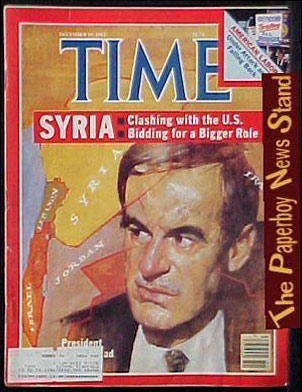
Bashar Al-Assad
Hafez al-Assad (Arabic: حافظ الأسد‎ Ḥāfiẓ al-Asad,
6 October 1930 – 10 June 2000)
President of the Syrian Arab Republic on Time magazine cover, 19 December 1983. He was in office from 22 February 1971 – 10 June 2000.

Image: Time magazine
Factionalism continued within the Baathist regime until the assumption of power by then Minister of Defense Lieutenant General Hafiz al Assad following a bloodless military coup in November 1970. Internal conflict between the Baath Party’s more moderate military wing and more extremist civilian wing had been exacerbated by external events, including Israel’s defeat of the Syrians and Egyptians in the June 1967 war, as a result of which Syria lost territory in the Golan Heights, as well as Syria’s disastrous intervention on behalf of the Palestine Liberation Organization (PLO) in Jordan in September 1970 (events later dubbed Black September).

Assad, approved as president by popular referendum in March 1971, quickly moved to establish an authoritarian regime with power concentrated in his own hands. His thirty- year presidency was characterized by a cult of personality, developed in order to maintain control over a potentially restive population and to provide cohesion and stability to government. The dominance of the Baath Party; the socialist structure of the government and economy; the military underpinning of the regime; the primacy of members of the Alawi sect, to which Asad belonged, in influential military and security positions; and the state of emergency imposed as a result of ongoing conflict with Israel further ensured the regime’s stability. Nevertheless, this approach to government came at a cost. Dissent was harshly eliminated, the most extreme example being the brutal suppression in February 1982 of the Muslim Brotherhood, which objected to the state’s secularism and the influence of the “heretical” Alawis. Moreover, the country’s economy suffered, and progress was hindered by an overstaffed and inefficient public sector run overwhelmingly according to Baath Party dictates.
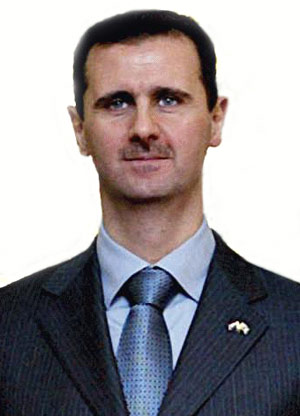
Bashar Al-Assad
Bashar al-Assad (Arabic: بشار الأسد‎, Baššār al-ʾAsad; born 11 September 1965)
President of the Syrian Arab Republic and Regional Secretary of the Ba'ath Party.
Image: Agência Brasil

Hafiz al Assad died in 2000 and was promptly succeeded by his son, Bashar al Assad, after the constitution was amended to reduce the mandatory minimum age of the president from 40 to 34. Bashar was then nominated by the Baath Party and elected president in a popular referendum in which he ran unopposed. From the start, the younger Assad appeared to make economic and political reform a focus and a priority of his presidency. He has faced resistance from the old guard, however. After a brief period of relaxation and openness known as the Damascus Spring (July 2000–February 2001), dissent is once again not tolerated in Syria, and it appears that any reforms will be slow in coming. Nevertheless, Assad reportedly is slowly dismantling the old regime by enforcing mandatory retirement and replacing certain high-level administrators with appointments from outside the Baath Party.

2011 Syrian Uprising
Syria was under an Emergency Law since 1962, effectively suspending most constitutional protections for citizens. Its President Hafez al-Assad led Syria for nearly 30 years, banning any opposing political party and any opposition candidate in any election. The Syrian government justified the state of emergency to the fact that Syria was in a state of war with Israel. According to BBC News, the government and ruling Ba'ath Party own and control much of the media. Criticism of the president and his family is banned and the domestic and foreign press are censored. The state exercises strict internet censorship and blocks many global websites with local appeal, including Facebook and YouTube, as well as opposition sites.
The popular uprising, taking place in various cities in Syria, began on 26 January 2011. Like other pro-democracy rebellions which have erupted across the Middle East, the protests have taken the form of various types, including marches and hunger strikes. In reacting to the largest uprising to take place in the country for decades, Syrian security forces have killed hundreds of protesters and injured many more.


http://www.nationsonline.org/oneworld/History/Syria-history.htm


-----


The Significance of Syria In the Bible History and Civilizations

Written by Rev. Peter G. Shadid.

Introduction:

Present map of Syria
Syria, Syria, a noticeable word the world hears each day and watches its horrible events on each TV screen. All mourn and pity the hundreds killed every day. Everyone is asking how to stop the ongoing bloodshed? The grudges and hatred are driving the Syrians to kill their neighbors. Innocent children, their mothers and seniors are terrified, and everyone yells Hey! Wow; “where are the people of the world and good men to show mercy, rescue and help!!!”
The Arab League met repeatedly, and disagreed; the United Nations met and talked a lot and couldn’t agree. Each one offers a solution in their own way making things more difficult and making a cold war. The storm arises the wind comes from everywhere and the waves get higher, the war goes on, and now the ship goes away from the shore of peace, without hope and without help leaving only one way up and that is to resort to the Lord of the universe. I wish all fighters with conscious would wake up and use their mind now and act wisely before it is too late!
The blame first falls on you, Syria ... As Jesus said, “A man’s enemies will be the members of his own household” as stated in (Math 10:36.)
Syria, remember how was your status in ancient history as compared to today? Did you change history or cover your face? you were so called the” Holy Land”, making tourists come from the west and east. Why? Because the Lord, Jesus Christ’s Holy feet walked on your land, and made it to be called Holy. We read in( Math 4:24) ”News about Him spread all over Syria, and people brought to Him all who were ill with various diseases, those suffering severe pain, the demon-possessed, those having seizures, and the paralyzed, and he healed them”
Jesus gave the greatest sermon in history, (Sermon on the Mount) on Mount Hermon, in Syria according to the Gospel of( Matthew ch-5-7 ) Syria, you are the cradle of the prophets and apostles and the center that spreads the gospel from Antioch in Syria to the world, and paved the way of the Forefathers of the Church to continue.
Syria, do you remember you are called “the cradle of civilizations and Semitic peoples, and their languages?” God spoke on Mount Horeb, Hermon, and Golgotha, and most of the prophecies on your land were fulfilled. Do you remember well, with the entire world, of the biblical history and privileges of what God has done through all of Syria and also to the whole world! It seems that the world ignored or disregarded to study such great history of Syria!! Here today as they sit and only to watch TV, they are amazed of what they see happening in Syria right now.
That is the objective of the author in this article to provide a manual of study and a call for prayer to Syria.
With Alshukr (thanks) to the readers and to friends who kindly distributed this article. (please read the end of the article)

Syria as I saw it in 2010

First - the physical condition: Let me just take a quick glance of what I've seen in the year 2010, about two years before the civil war, and I will start with the visitor’s impression and then the tourist. First, what the eye sees such as the construction on the road, and in particular the new town of Ghasom in Horan (my home town). What really surprised me more was that not one of the old houses was suitable to live in. Today the old town is like a museum ruins. New modern towns have been developed around the old towns. Moreover the strangest thing was when I was touring the city of Der’a, I saw the city as if I was in one of the most developed cities. Some said that more than 500% new modern buildings have been added. I soon notice that the old town did not exist and there was no trace of it. Now I’ve just arrived on my journey to the borders of Jordan. Der’a is 5 miles from the border of Jordan, but now it is all one. Der’a has expanded so much, East, West and North. I noticed a lot of garages for cars, and fine hotels, car rentals and running yellow taxis in all the streets. There is no doubt that the enumeration of the population explosion in a period of twenty years, therefore, think how much more the population has increased with the new buildings! Der’a is just like if you were to visit any modern city in the World!!

Damascus the capital:

Damascus being a historical city is pided into two parts, the old and modern, Damascus is a modern capital like other modern cities.The only difference is that it has a vivid Arabic character and splendor of its own Damascus has grown so much in the surrounding suburbs and neighboring areas and it has become (Greater Damascus). Damascus, was called Fayha, (oasis of the Arab world) it was and still is a beacon and inspiration to all poets of the East and West. It has a glorious history, considered a world archaeological museum and the world’s oldest living city in the world. It is equipped with the most modern technology to respond to any problem in the city.

Secondly – Educationally

Syria, relatively, has now a very high standard of education it is FREE FOR ALL LEVELS!!!! For this it attracts a high number of Arab students to colleges and higher education. Syria also has always supported the goal to eliminate illiteracy of all segments of society, and they did. The goal is that a high percentage of people today have a baccalaureate (High School) for males and females. The proportion of female staff in government departments has reached 40%, while the number of students in high schools and universities around a few million which is relatively very good. There are five public universities and a good number of private universities in Syria which offer a variety of specialties. Syria is considered one of the rich countries in its Petroleum and Industries. Syria has highly developed as it seems in 2010!!

Thirdly –the agricultural aspect:

For almost forty five years, the rain was scarce and the soil in the land was dry. As an example, the Horan area is considered the richest in the Middle East in agriculture because of its soft fertile soil, which was called “The Basket bread of Rome”. Therefore, the land has remained barren due to “the lack of rain”. But now, it is almost unbelievable for the eye to see the fresh vegetables and fruits that dress the land after years of drought and scarcity. I took a car and went through some villages in Horan and there you will find in all the villages and houses, tall trees and olive grove in particular, which made many of the displaced to return to farmland for attention by digging wells for water. On traffic highway we saw fresh fruits and vegetable markets and stores, restaurants and gas stations. This has been undoubtedly the greatest factor that improved the standard of living progress and prosperity to the economy in general. Here our visit ended.

Part I: The significance of Syria in Bible history and civilization

First - Syria in the Bible:

The Greater and Minor Syria were mentioned approximately 300 times in the Bible
In the Gospel of (Luke 2:1-2) we read: “In those days, Caesar Augustus issued a decree that a census should be taken of the entire Roman world. This was the first census that took place when Cyrenius was governor of Syria, this is exactly the time when Jesus was born in Bethlehem. Here we should mention the time of the birth of Jesus has pided history into before and after his birth (BC and AD).
Damascus is mentioned about 60 times in the Bible and Antioch 20 times; When in this holy spot of the, Kingdom World, God has chosen prophets in the Old Testament, and Apostles in the New Testament. We must continue to remember Jerusalem and Damascus are the ancient centers of Bible history.
In this Holy spot of the world God, the Almighty has chosen this area which has become the cradle of the prophets and Apostles who spread the word of God to the world. His prophets reveal His love in the Old Testament, and so our Lord Jesus Christ has chosen his 12 disciples to follow Him who became the apostle to spread the Gospel. There are many villages, towns and cities that still exist and carry the same names at the time of Christ, like, Damascus , Hamah, Ezra, Der’a Ethra’e, Magdal, the town of Mary Magdaline as some people think. Ethra’e (Der’a today) was the area, as some say, where Job lived close to his three wise friends. Still many cities and towns in Palestine are still called the same at the time of Christ. We may consider Jerusalem as the center of the World in Bible prophecies.
The most glorious gift to mankind is the Holy Bible, the word of God, the prophets were inspired by the spirit of God to say and write “So Says the Lord” (2Tim3:16). Further, Jesus Christ is the living word (JN1:1) and Jesus is the revelation of God to mankind (Hebrew1:1)
In addition, the Ten Commandments were given on Mount Horeb (Sinas); Isaiah, the prophet, prophesied his coming by saying his name “For to us a child is born, and he will be called Wonderful Counselor, Mighty God, Everlasting Father, and Prince of Peace”.( Isaiah 9:6) Furthermore, we read the fulfillment in (Math 1:23): “ The Angels said to Behold a Virgin shall be with child and shall bring forth a son and they shall call his name Emmanuel which being interpreted is “God with Us”.”
His birth was in miracles, and He made miracles, according to the Gospel (Math 4:24). “News about him spread all over Syria and people brought to him all who were ill with various diseases, those suffering pain, demon possessed, those having seizures, and the paralyzed, and he healed them” (Math 9:35). We also read that the Lord Jesus and the crowd went up to the Mount (Hermon in Syria) and took it as his platform and gave this greatest sermon in the world called: the “Sermon on the Mount” According to (Matthew ch. 5-7) “Sermon on the Mount” and still is considered the principles of the Kingdom of Christ to his followers. This sermon has changed the systems, concepts moral standards and constitutions of the entire world; Basic teachings of the pine Christ it is realistic by the grace of God based on love. It is considered by all leaders of the world in history, such as, Gandhi, Napoleon and many others in history.
Then we see the Lord Jesus takes with him three disciples. They were: (Peter, James and John) to Mount Hermon in the great event of The Transfiguration, as we read in (Luke 9:33); God the Father appeared in the clouds and spoke to his son Jesus Christ in glorious splendor He said: “This is my son, whom I have chosen, listen to him”. There appeared also, the two prophets, Moses and Elijah, the glory of God was like the sun which made the disciples to fall on their faces and worship. Why don’t we kneel down to him and do the same?
What a marvelous pine privilege for you, Syria to have Jesus Christ walk on your land, preach, teach and do miracles of healing (Math 4:24) We read also in (Math 9:35) “ when Jesus saw the multitudes He was moved with compassion because He saw them as sheep without a Shepherd.” We only pray that the fighting Syrian people today would look to Jesus today to visit Syria, heal their land, stop the terrible civil war and save their Souls!

Second: Syria, and the Apostle Paul

(From a terrorist to a great Apostle of God), this was the title of the film which the Syrian government has allowed to be seen in public with collaboration from all Syrian communities. It is really a good sign the government on the part of the Syrian government, and citizens to its people and all alike and everyone was appreciative and grateful and no one was against this.
Additionally, the another beautiful gesture is the government issued official permit to build a memorial and a historic shrine and a statue to the Apostle Paul showing all the aspects of his life written on it some of his words from the Bible. You, the apostle Paul deserve all the glory of God and all of the earthy appreciation for spreading the Gospel in Syria the world and his inspired epistles by God!!! This shrine is located between the town of Heena and Damascus. This is the place when Jesus appeared to him on the road to Damascus. In the church building, where we sat down with our guide, Mr. Michael Shahen Baba and his kind wife, it was a glorious experience to sit down in the church to meditate, pray and thank God for the apostle Paul!!

Syria, the Epicenter of the Gospel Missions.

Antioch was the capital of the Romans in the Middle East and occupies first place in terms of engineering art and the magnificent beauty of the buildings, parks and streets, making it a place of pilgrimage for tourists. More than that, it has become worldly known for the spreading “the Gospel which is the power of God for salvation.” Congratulations to you, Syria, remember that most of your people have become Christian followers of Christ, and hundreds of great churches were built with a civilization that surpasses the Roman & Greek civilizations because it is the civilization of love and peace. Why, because it is a spiritual civilization of the Holy Gospel of peace and love through Jesus Christ our Lord. It is eternal!!

Distinctive features of Antioch in Syria:

-It has become a great Christian center.
- “The Disciples were called Christians first in Antioch “((Acts 11:26))
-It was the center of higher education (theological schools) which was spread all over?
- Great men emerged from Antioch, who accompanied the Apostle Paul in his travels
- Some fathers of the early church such as John the theologian known as the golden mouth came from it
Antioch was in the starting center for the Apostle Paul, Barnabas, and Luke, Mark and others who preached the world despite the difficulties, persecutions and martyrdom, but the blood of the martyrs became seeds of the church. And do not forget that the increased heresies were as Arios/Nastorian heresy and several others.
This is a reminder again to Syria that the Holy Gospel, spread to the whole world from Jerusalem and Antioch. It is our prayer that Syria will hear anew and accept the message of the gospel of Love and Peace.

Syria and the Fathers of the Church

The Fathers of the Church were a group of God’s choice, mature believers who had great talents and were gifted in preaching and evangelizing without fear. They were gifted in theology and in the defense of faith against the heresies such as the “Aryanism/Nestorianism” and many others of which was widely spread in the early centuries. The Forefathers are pided into three sections:
1 –Those who lived during the Apostles’ time such as Paul, Barnabas and John and others in the first century
2 –Those who lived before the council of Nicea
3 –Those who lived during and after the council of Nicea. The ones who attended the council of Nicea were mostly from Greater Syria, the Gulf, Arabian Peninsula, Egypt, Asia Minor, Europe and other parts of the world. Also Constantine, the emperor, had attended, whom God used. His mother Helena deserves the credit by leading him to the faith in Christ. The “Church of the Resurrection” was built in Jerusalem and called by her name. Constantine, the Emperor was the one who officially introduced Christianity to be the official religion of the Roman Empire.
Let’s not forget that God used, previously, Emperor” Philip the Arab”, from Syria, who was converted with his son and were baptized by Oregon,( the famous theologian) in Bosra-Sham, some say it was the town of Shaba, and whose help in the return of exiled Christians from Arabia was very much appreciated. They were exiled by his previous pagan emperor. Emperor Phillip the Arab (he reigned from 244-249 AD)was killed with his son by his pagan General and took his place. The council of Nicea concluded, at the end, by giving us “The Apostles Creed which was and still a rock against the heresies and the philosophies contrary to the true teachings of the Gospel. Here is the literal Nicene Creed.
Nicene Creed:
We believe in one God, the Father Almighty, Maker of heaven and earth, of all things visible and invisible.
And in one Lord Jesus Christ, the only begotten Son of God, begotten of His Father before all worlds, God of God, Light of Light, very God of very God, begotten, not made, being of one substance with the Father; by whom all things were made; Who for us men and for our salvation came down from heaven, and was incarnate by the Holy Spirit of the virgin Mary, and was made man; and was crucified also for us under Pontius Pilate; He suffered and was buried; and the third day He rose again according to the scriptures and ascended into heaven, and is seated at the right hand of the Father; and He shall come again, with glory, to judge both the living and the dead; Whose kingdom shall have no end.
And we believe in the Holy Spirit, the Lord and giver of life, Who proceeds from the Father and the Son; Who with the Father and the Son together is worshiped and glorified; Who spoke by the prophets; and we believe in one holy catholic and apostolic church; we acknowledge one baptism for the remission of sins; and we look for the resurrection of the dead, and the life of the world to come. Amen
We should not forget the Apostle Creed 180 AD which was nearly the same as the Nicene Creed. We also must not forget that those “fathers” were of great help and great examples of faith. Some of them were killed, tortured in a painful way, crucified and burned, lived in rugged caves as mentioned in (Hebrews 11), but as has been said that the blood of the martyrs became the seed of the Church.

Part II: the significance of Syria in the world history

“Syria is the cradle of civilizations:”

There is no good library in the world today without books and volumes on the history of ancient Syria.
The most known historians acknowledged that Syria is the cradle of civilization not less than thirty civilizations emerged from or through Syria. All were mentioned in the Bible, in particular the Semitic people.
This is due to God’s provision and choice first and its unique, strategic geographic location. The major civilizations that appeared were the Semitic civilization and from them descended the Sumerians, Acadians Canaanites, Phoenicians, Assyrians, Hittites, Arameans, Chaldeans, the Nabataeans, Chassasinites- and all Arabs are considered Semitic people. Moreover, the Greeks and Romans were very much advanced by the factor of their own development of civilization and power. They (Greeks and Romans) are not Semitic as Europe is the descendant of Japheth as South Africa is from Ham. If we compare our modern civilization today with our modern technology in comparison, our world seems a small country, that is to say they can see, hear and speak to each other as they are neighbors!!
As prophesied by the prophet Daniel “in the last days knowledge increases.” (Dan 12:4) Our most advanced modern civilization which has some good. May God protect us from its frightening evil, to the whole World! We are now “in the last days” as the Bible tells us as we read about the prophecies of Christ according in the Gospel of Matthew Chapter 24 and other prophecies. One was of the Prophet Isaiah who predicted “And he shall judge among the nations and shall rebuke many people: and they shall beat their swords into plowshares and their spears into pruning hooks”: nation shall not lift up sword against nation, neither shall they learn war anymore.” (Is. 32:17,18). If only those who carry weapons now have to learn that they are agents of Satan. Because our God is a God of Live ,Love and Peace (Math 10:10)

Syria, the cradle of the family of Semitic languages:

We mentioned above, that Syria is the cradle of Semitic people; therefore they must have had their own Semitic languages. These languages were of the Canaanites and Phoenicians beginning from 2000 BC. The earliest date for us was 1400 BC during the Aramaic period. Their influence lasted for a long time until 600 A.D. The Aramaic language was spread throughout the Middle East especially at the time of Jesus Christ. (Jesus spoke Aramaic and some portions of the Old Testament were written in the Aramaic language). In the northern part of Syria and part of Iraq, the people spoke authentic Aramaic which has become the mother of all Semitic languages in all the Middle East.
(Civilizations are developed gradually and so languages as well. Thus we find that the Aramaic language is really the mother of all languages or the Semitic dialects and from it the following branches emerged,
- Aramaic, Arabic in northern Syria, and the Euphrates. The classical Arabic is most related to Syria.
-Arabic Aramaic in Arabia with a Badawiah - dialect
- Arabic Aramaic in Ethiopia and the dialect is a Swahili dialect
- Aramaic Assyrian and Chaldean in Iraq
- Aramaic and Syrian dialect in Maaloula –Damascus and still spoken to this day
- Aramaic Nabateans, in Jordan and Yemen. The Ghassasinites came to Syria from Yemen, established their kingdom and they, in turn, improved much of the Arabic Nabateans and continued to be classical as we see it today. We must not forget that the Hebrew and Arabic came from the same root of the Aramaic. They have similarities in grammar and vocabulary. This proves that Greater Syria was actually “The cradle of family Semitic languages of all the Middle East.

Syria as the World Archaeology Museum:

Ruins! Ruins!!! And excavations, you see them everywhere you go in villages, towns and cities in Syria. There is no end to it.
Today as it was yesterday, this is Syria, a world museum and a magnet for tourists and visitors, although the Museums of the West are full of the ruins of Greater Syria or (Fertile Crescent), I saw first- hand wings and full floors that occupy much space in the museums of France, Spain, England and Germany under the name of (ruins of Syria) or say, the Middle East. As we know, Greater Syria has an open book
to the civilizations of world history in the East and West. The excavators have transferred a large number of antiquities that they discovered in Syria to museums of the West, especially in the days of (colonialism), whether from Palestine or Syria or Lebanon or Jordan, Iraq. Here we find that thousands of prospectors/ archaeologists are spending a lot of money, in this way, driven by the spirit of curiosity, science and religion to discover the history of our ancestors, ancient civilizations, and their relics. This also proves the validity and sincerity of the Living Word of God, as an example, the manuscripts Imran, discovered in Jordan, acknowledged the authenticity of the Book of Isaiah as we read it today. God is eternal, so is his word!
Now come with me to Lattakia, one of the oldest and greatest places to explore the ancient ruins which take us back to the thousands of generations. Ugarit is the birthplace of the first alphabet in the world located about 15 miles from Lattakia. It was in Ugarit where the alphabetic script was first used successfully by the Phoenicians marking a great leap in the progress of human civilization. It is the name of an ancient city on the North Syrian coast opposite the island of Cyprus, 40 miles SW of Antioch; also called Ras Shamra. The city, with its port, Mina el Beida (White Harbor), was an important commercial center through which passed the trade of Syria and Mesopotamia with Egypt, Cyprus, and the Aegean area. Occasionally antiquities had been found here by local people, but in 1928 a peasant struck the roof of a buried tomb with his plow and made a discovery which attracted the attention of the authorities to come... The French authorities were in charge of Syria at the time. In 1929 archeologists from France’s famous Claude F. A. Schaefer began a series of excavations which have revealed much of the history of the site. The excavations continued until 1939 resulting in the discovery of many objects of great archeological value, including hundreds of Tablets known as “The Ras Shamra Tablets”. The French have continued digging at Ras Shamra until today, although with more involvement from the Syrians in recent years.. The excavations have revealed an extensive Late Bronze Age city (14th-13th centuries B.C) with a trace of temples and houses , most of which have revealed troves of texts. One of these famous discoveries, which provided hundreds of manuscripts on stones and some pictures and statues that after study and translation, gives us a wealth of rich information.
Come with me to the city of Aleppo, and in this city the second-greatest discovery was found, namely, (Ebla), which is located near the city of Aleppo to the West and likewise revealed the Semitic peoples like Chaldeans, Assyrian, Hittite and many more.
Then back again to Lattakia, where discoveries were discovered here with the utmost importance namely” Kingdom Marie” which dates back to the era of Abraham who passed through Damascus, and called his agent ( Eleizer of Damascus) ( Genesis 15:2). In Damascus, we find hundreds of ruins that tell about the events of the New Testament the Apostles such as the story of Paul.
In addition, the ruins of the hundreds of churches in Damascus and throughout Syria, not to mention the living centers such as “Dair Saidanaya & Maaloula” where the nuns and monks still speak the living Aramaic Assyrians dialect today.
Come with me to the ancient and historic ruins of Tadmor which is considered the capital andbride of the desert during the reign of Queen Zenobia. In Tadmor, you will find streets of Roman columns, tombs with signs of the cross, churches and priests engravings on the stones.
Now come with me to Bosra Sham, a Romanian Center contains the largest Roman Amphitheatre in Syria.
Bosra Sham is also considered a historic and religious center, where the largest cathedral was built there in its time a small miniature church of Sofia, in Istanbul in the fourth century. The Cathedral later disintegrated by Muslims after the 6th century.
The traditional church history tells us that when the apostle Matthew had visited it and so the two disciples of the sovereign who were sent by Jesus to preach, and also one of the deacons of Jerusalem had served in it. In Bosra remember also, Emperor Philip the Arab and his son, were both converted and baptized by the gifted theologian Oregon. Bosra remained the Capital of Al-Ghassasinites for centuries until the conquest of Islam. At this very time we remember ” Raheb Bouhayra” (the Heretic Monk) who was teaching the heresy of Arius and Nestorius which denied the deity of Christ. This heresy was refuted by the Nicene Creed. Raheb Bouhayra taught this very heresy to “Prophet Mohammad” which many historians and people believe that this heresy has become the mother of the Islamic religion.
It is possible that Paul the apostle went through it on his way to Arabia since it is a gateway between Damascus, Tadmor, Arabia and Iraq. It was also an important commercial center for exchanging goods and products. “I went immediately to Arabia and later returned to Damascus”. (Galations 1:17) So Bosra Sham was the capital of the Ghassasinite Kingdom at time of the Byzantine Empire.
From the Bani Ghassan tribe (the Ghassasinites) descended many Christian families in Syria, Lebanon and Jordan.
In conclusion, this is just a brief glimpse and handful of information about the Significance of Syria in the Bible and world history. It is again to give a manual to educate the readers to study further and to be more knowledgeable and thankful to God for what He has done in and through Syria to the World!! Moreover, remember to pray for God to save Syria from this agony of civil war!!

Special Appeal and Prayer to you Syria:

Syria you are in a Dangerous Storm

The wind is blowing hard from everywhere, the waves are getting higher and higher, the ship is moving astray, away from the shore of peace. No help from the U.N., East or West, hundreds being killed every day. You becoming helpless, hopeless and desperate, here is one hope to you to remember: We read in Matthew (8:23-27) “Then he got into the boat and his disciples followed him. Without warning, a furious storm came up on the lake, so that the waves swept over the boat. But Jesus was sleeping. The disciples went and woke Him, saying, Lord, save us! We’re going to drown!” He replied you of little faith, why are you so afraid? Then he got up and rebuked the winds the waves and it was completely calm. The men were amazed, and asked: “What kind of man is this? Even the winds and the waves obey him!”
Syria! Cry out to God similarly and you will be saved!
Remember what Jesus has done in Syria
1. Remember, what miracles Jesus did in Syria. ”News about him spread all over Syria, and people brought to him all who were ill with various diseases, those suffering severe pain, the demon-possessed , those having seizures, and the paralyzed, and he healed them”( Matthew 4:24)
2. Remember the Lord Jesus on Mount Hermon (Jabal Sheikh) where he gave the greatest sermon of history which was and still is the principle of pine teachings in following Christ. (Matthew Ch. 5-7)
3. Remember and hear the voice of God, on Mount Hermon from the midst of the glorious cloud saying; ”This is my beloved son whom I am pleased, listen to Him” And there were two prophets Moses and Elijah and Because of the strong light of Transfiguration, the disciples fell on their faces bowing down to worship.
4. Remember, Oh! People of Syria, remember how Paul, the apostle, was converted from a terrorist to a greater apostle of God on the road to Damascus and how the Gospel was spread to the whole world first from Antioch in your land!
5. Remember and hear the voice of God from Mount Horeb to Mount Hermon toMount Golgotha. The Lord Jesus said” I am the light of the world and he who follows me will not walk in darkness but will have the light of life”.

You are in a furious storm, not a storm in a teacup but in a storm from Satan!! Cry out to God to save you physically and in spirit. Come back! Come back! And believe Him! You will be saved as people and as government “There is no other way to salvation.” Jesus said: (“if you keep silent the stones will cry out”). Your land is screaming and your mountains are crying. God is calling out; (Come untome and you will be saved).
Millions of believers are praying for you Syria, for real peace and salvation. Believe that Jesus will visit you again Syria and make miracles, he still loves you, so do we!

References:

1. The Holy Bible (Van Dyke Translation)
2. Dictionary of the Arabic Bible; by Dr. Peter Abid-Al Malik and Asso. Al-Mashal library, Beirut
3. “Christianity & its literature among the pre-Islamic Arabs” by Dr. Luis Sheeko-Beirut , Dictionary of the Arabic Bible; by Dr. Peter Abid-Al Malik and Asso. Al-Mashal library, Beirut Labanon“History of Syria:, by Dr Philip Hitti, Beirut Lebanon
4. “History of Syria, Lebanon and Palestine (Vol.1); by Dr. Philip Hitti, Beirut Lebanon
5. “The significance of Ugarit in the Syria’s archeology” by Sadik Wardeh, prof of languages and a specialist in Syria’s archeology
6. Christians in the Arab East:, by Robert Brenton Betts
7. Christianity in the Middle East:, by Joyce Napper

Notes for Response and Encouragement:

1. If you enjoyed reading this article, contact us (see below)
2. If you need a few more copies, please send us your address or email address.
3. If you would like a book written on this subject please respond.
For any of the above, please contact us at:
Tel. (407)-240-6272
Email: [email protected]
http://www.arabicbible.com/for-christians/162-syria/1827-the-significance-of-syria-in-the-bible-history-and-civilizations.html
-------------


What was Historical Syria and Phoenicia? Is there confusion?

Introduction
The eastern Mediterranean was for millennia, an intersection of cultures, civilizations and invaders. Its unenviable position kept it fluid and undetermined as far as boundaries, divisions and government. Nevertheless, due its geography, that part of the world became a haven for various communities despite the changing faces of invaders. What is called Syria today was never the same in antiquity and the name did not mean the same location over the ages.
Over the ages various kingdoms existed in the eastern Mediterranean. Often, the area between Taurus and Asia Minor, the Arabian desert, Mesopotamia, and the Mediterranean sea was never really a single state or a single political entity. Further, the ethnic groups, that occupied that part of the world, were never of the same race or under single rule. Foreign invaders; however, forced artificial unions on the people of the region under single rule of non-homogenous ethnic groups, under the Egyptians, Assyrians, Babylonians, Macedonians, Romans...etc
The Levant in c. 300 A.D.
Saint Jerome's Testimony Regarding Phoenicia

Saint Jerome clearly wrote c. 380 A.D. that Phoenicia existed in 231-232 A.D. (Saint Jerome, cp. xxx. 4 who ): "Damnatur Origenes a Demetrio episeopo exceptis Palaestinae...et Phoenicis atque Achaiae sacerdotibus." For further information on the history of the early Christian Church and the division of the region of the Eastern Mediterranean, please see "Church of Phoenicia and Antioch" in t his site.
The Names: Syria, the Region, and Sur (Tyre), the City
The name "Syria" was employed by the Greeks to designate the eastern Mediterranean though it was not a nation, body of nations or country such as Egypt. The name Syria was derived from the famous Phoenician city of Sur (Tyre/Tyrus) -- hence Surya, or Tsurya from the Greek Tsyrus. Tyre, along with Sidon, were established in ancient antiquity, at the very dawn well before 3000 BC. It is, therefore, understandable that the region came to be referred to after the most famous city of Sur or Tyre in the Greeks' mind. This is analogous to the empire of Byzantines being called after the city of Byzantium which, unlike Tyre, was of no importance compared to the great city of Tyre.
Names of the Same Geographical Area Varied
Formerly, Syria was erroneously believed to have been an abbreviation of "Assyria." The suggestion that the name came from old Babylonian is questionable since Assyria is actually Ashur or Athur. The only reference worth mentioning is the unknown term in old Babylonian of Suri applied to the north-eastern corner of the eastern Mediterranean. However, the Babylonians and the Assyrians used completely different names to refer to the said area: "Amurru" (the Land of the Amorites) and "Martu" (the West-Land). Further, the extreme northern part of eastern Mediterranean also known as "Khatti", or the Land of the Hittites. The most southern region was known as "Kena'nu" or "Kanaan." In the Old Testament, the whole are was called "Aram", and its inhabitant "Arameans." But there were several Biblical "Arams": "Aram-naharaim" or "Aram of the Two Rivers" -- Mesopotamia; "Paddon-Aram" (the region of Haran), in the extreme north of Mesopotamia; "Aram-Ma'rak" to the north of Palestine; "Aram-beth Rehob", "Aram-Sobah", and "Aram of Damascus." This confusion of terms and names goes to prove what was mentioned in the beginning of this essay that the area which is known today as Syria was always a fluid cluster of places and peoples that meant very little. Finally, what must be mentioned is the fact that in ancient history city-states were the norm that denoted "nations" and not geographical boundary as we understand them today.
Rulers of the Levant before the Arab Conquest
Political Divisions, Sub-divisions and Changes 


Greek
During the Greek and Roman dominations the political divisions of area were indefinite and almost unintelligible. However, the Greeks were to blame for giving the name Syria to the whole area of the eastern Mediterranean. Thereafter, Syria and Syrians became frequently used to refer erroneously to the region and the ethnic groups that inhabited that part of the world. The impact of this misnomer continued till the early 20th century. Strabo mentions five great provinces: (1) Commagen; (2) Seleucia; (3) Coelle-Syria; (4) Phoenicia; and (5) Judaea. Pliny's divisions were more numerous than those of Strabo. It appears that each city on rising to importance gave its name to a surrounding territory, larger or smaller, and this in time assumed the rank of a province. Ptolemy mentioned thirteen provinces: Cammagene, Pieria, Cyrrhestica, Seleucia, Casiotis, Chalibonitis, Chalcis, Apamene, Laodicea, Phoenicia, Coele-Syria, Palmyrene, and Batanea, and he gave a long list of the cities contained in them.
Romans
Under the Romans, the area became a province of the empire. Some portions of it were permitted to remain for a time under the rule of petty princes, dependent on the imperial government. Gradually, however, all these were incorporated, and Antioch was the capital. Under Hadrian the province was divided into two parts: Syria-Major, in the north, and Syrio-Phoenicia, in the south. The New Testament refereed to the woman who had an encounter with Christ near Sidon, as the Syrio-Phoenician woman; and, yet, referred to the same woman as the Canaanite woman, also. Towards the close of the fourth century another partition of region was made. It formed the basis of its ecclesiastical government: (1) Coele Syria; (2) Syria Secunda or Phoenicia Secunda; (3) Phoenicia Prima.
The main divisions that relate to the study of Phoenicia during the Roman and Byzantine era are the following:
  • Phoenicia Prima: Maritima & Libanesis
  • Phoenicia Secunda or Syria Secunda & Palmyra (see map)
  • Coele Syria
  • Mosul
  • Bostra
  • Araba
  • Palastina Iudadea
  • Palastina Salutaris
The Makeup of Phoenicia 


Phoenicia was incorporated into the Roman cluster of regions, though Aradus, Sidon, and Tyre retained self-government. Berytus (Beirut), relatively obscure to this point, rose to prominence by virtue of Augustus' grant of Roman colonial status and by the lavish building program. Under the Severan dynasty (AD 193–235) Sidon, Tyre, and probably Heliopolis (Baalbek) also received colonial status. Under this dynasty the Eastern Mediterranean of the Romans was partitioned into two parts: Syria Coele (“Hollow Syria”), comprising a large region loosely defined as the north and east; and Canaan or Syrio-Phoenicia (both referred to in the New Testament, as indicated above) in the southwestern region, which included not only coastal Phoenicia but also the territory beyond the mountains and into the desert. Under the provincial reorganization of the Eastern Roman emperor Theodosius II in the early 5th century AD, the southwestern region was divided into two provinces: Phoenicia Prima (Maritima), basically ancient Phoenicia (and sometimes including ad Libanum-Libanesis); and Phoenicia Secunda ad Libanum-Libanesis, an area extending from Mt. Lebanon on the west and deep into the desert in the east to include the cities of Emesa (its capital -- Homs), Heliopolis (Baalbek), Damascus, and Palmyra. The confusion of territorial divisions mentioned herewith is just another example of the muddled state of being of the political division of the area.
During the period of the Roman Empire the native Phoenician language died out in the whole area and was replaced by Aramaic as the vernacular, as the case with most Semitic languages of the region. Latin, the language of the soldiers and administrators, in turn fell before Greek, the language of literature, philosophy and science.
During this time, also, Heliopolis (Baalbek) and Berytus became prominent cities. At Heliopolis the Roman emperors, particularly the Severans, constructed a monumental temple complex, the most spectacular elements of which were the Temple of Jupiter Heliopolitanus and the Temple of Bacchus. Berytus, on the other hand, became the seat of the most famous provincial school of Roman law. The school, which probably was founded by Septimius Severus, a Roman Emperor of Phoenician Punic blood, lasted until the destruction of Berytus itself by a sequence of earthquakes, tidal wave, and fire in the mid-6th century.
In 608–609 the Persian king Khosrow II pillaged region and reorganized the area again into a new satrapy, excluding only Phoenicia Maritima. Between 622 and 629 the Byzantine emperor Heraclius mounted an offensive and restored the region to his empire. That was the last time in history that the territorial integrity and name of Phoenicia had a politically recognized presence. This success was short-lived; in the 630s Muslim Arabs conquered the east, and the old Phoenician cities offered only token resistance to the invader.
Finally, following is a short verbatim quote from the Ecumenical Council of Sardica for those who misinform that the name Phoenicia was lost, forgotten and never used again, long before the time of Christ (T. Kjeilen LexicOrient's Encyclopedia of the Orient writes "64 BC: Phoenicia becomes part of the Roman province of Syria, and the name Phoenicia is no longer used." ) while Phoenicia continued to be for another 700 years.
The Ecumenical Council of Sardica, 343 to 344 A.D.
34. "We, the holy synod met in Sardica from different provinces of the East, namely, Thebais, Egypt, Palestine, Arabia, Phoenicia, Coele Syria, Mesopotamia, Cilicia, Cappadocia, Pontus, Paphlagonia, Galatia, Bithynia and Hellespont, from Asia, namely, the two provinces of Phrygia, Pisidia, the islands of the Cyclades, Pamphylia, Caria, Lydia, from Europe, namely, Thrace, Haemimontus, Moesia, and the two provinces of Pannonia, have set forth this creed. "We believe in one God, the Father Almighty, Creator and Maker of all things, from whom all fatherhood in heaven and earth is named: "And we believe in His Only-begotten Son our Lord Jesus Christ, who before all ages was begotten of the Father, God of God, Light of Light, through whom were made all things which are in heaven and earth, visible and invisible: who is the Word and Wisdom and Might and Life and true Light: and who in the last days for our sake was incarnate, and Was born of the holy Virgin, who was crucified and dead and buried, And rose from the dead on the third day, And was received into heaven, And sitteth on the right hand of the Father, And shall come to judge the quick and the dead and to give to every man according to his works: Whose kingdom remaineth without end for ever and ever. For He sitteth on the right hand of the Father not only in this age, but also in the age to come. "We believe also in the Holy Ghost, that is, the Paraclete, whom according to His promise He sent to His apostles after His return into the heavens to teach them and to bring all things to their remembrance, through whom also the souls of them that believe sincerely in Him are sanctified. "But those who say that the Son of God is sprung from things non-existent or from another substance and not from God, and that there was a time or age when He was not, the holy Catholic Church holds them as aliens. Likewise also those who say that there are three Gods, or that Christ is not God and that before the ages He was neither Christ nor Son of God, or that He Himself is the Father and the Son and the Holy Ghost, or that the Son is incapable of birth; or that the Father begat the Son without purpose or will: the holy Catholic Church anathematizes."
Arab
Beginning with the Arab Muslim occupation in the 7th century, the Arabs typically considered the country merely an undifferentiated part of Bilad ash-Sham which eventually translated into Greater Syria. During that period the confusion over the name received its most devastating blow. What was across the ages a mish-mash of kingdoms, ethnic groups, regions and territories now became an artificial entity that spread across various races and regions to include everything that bordering the Byzantine dominions in Asia Minor in the north to Arabia in the South.
Seljuk OttomanTurk
Under the Ottoman Turkish occupation, the "confusion" was reinforced with the new hegemony that subdivided the region into less ethnically or geographically coherent regions, separating cities into quasi-city states again. Consequently, Ottoman Turkish excellence at lack of organization and mismanagement aggravated the blunders of previous invaders with a political jigsaw that pitted ethnic groups against each other and left the region a much sicker entity than before. That was a reflection of the sick state of the Ottoman empire around the Mediterranean.
Languages
The mix of races that inhabited the eastern Mediterranean embraced various religions and spoke different languages depending on the lingua franca of the ages. With the advent of Christ, most embraced Christianity after paganism and spoke Aramaic until about the seventh century, when Arab invasion forced the Arabic language to become the vernacular tongue of the country. Aramaic, however, held its ground for a considerable time and traces of it are still to be found in the spoken languages (as opposed to classical Arabic) of the peoples of the region. Further, Aramaic survives in the liturgy of the Syriac, Chaldean, Assyrian and Maronite Churches, as well as in some villages the most notable of which is Maalula. The latter is Western Aramaic which is the language used by Christ.
In 527 A.D., the Melkites translated the Greek scriptures and other writings into their local Aramaic dialect — Western Aramaic — which the people of the area were still speaking in the 6th century. In fact, even later in 969 A.D. when Antioch became a centre for the Melkite Christians, Aramaic continued to be their language.
References:
  1. Burckhardt, Travels in Syria and the Holy Land (1822), 1-309.
  2. Wortabet, The Syrians (London, 1896).
  3. Chesnet, Euphrates Expedition, (London, 1838).
  4. Ritter, Erkunden von Asien, XVII, pts. 1 and 2 (Berlin, 1854-65).
  5. Von Kremer, Mittelsyrien und Damascus (Vienna, 1853).
  6. Burton and Drake, Unexplored Syria (London, 1852).
  7. Reclus, Nouv. géog. univers. d'Asie Antérieure (1884).
  8. Porter, Five Years in Damascus (London, 1855).
  9. Blunt, Bedouins of the Euphrates (London, 1870).
  10. de Vogue, Syrie Centrale (Paris, 1865-77).
  11. Idem, Syrie, Palestine, Mont Athos (Paris, 1879).
  12. Sachau, Reise in Syrien u. Mesopotamien (Leipzig, 1883).
  13. Miller, Alone through Syria (London, 1891).
  14. Charmes, Voyage en Syrie (Paris, 1891).
  15. Lady Burton, Inner Life of Syria (London, 1875).
  16. Post, Flora of Syria, Palestine, and Sinai (Beirut, 1896).
  17. Humann and Puckstein, Reisen in Nord-Syrien (1890).
  18. Post, Essays on the Sects and Nationalities of Syria, etc. (London, 1890).
  19. Goodrich-Freer, In a Syrian Saddle (London, 1905).
  20. Bell, The Desert and the Sown (London, 1907).
  21. Lortet, La Syrie d'aujord'hui (Paris, 1884).
  22. Curtis, To-day in Syria and Palestine (New York, 1903).
  23. Libby and Hoskins, The Jordan Valley and Petra (New York, 1905).
  24. Inchbold, Under the Syrian Sun (Philadelphia, 1907).
  25. Kelman and Thomas, From Damascus to Palmyra (London, 1908).
  26. Margoliouth, Cairo, Jerusalem, and Damascus (London, 1907).
  27. Quinet, Syrie, Lebon, et Palestine (Paris, 1896).
  28. Baedeker, Palestine and Syria (Leipsic, 1906).
  29. Dupont, Cours Géographique dé l'Empire Ottoman (Paris, 1907).
  30. G. Smith, Historical Geography of the Holy Land (London, 1900).
  31. The Catholic Encyclopedia, Volume XIV, 1909
  32. Hefele, Hist. Councils. Vol. II., pp. 172 et seqq.

 http://phoenicia.org/syria.html

----------------


Sunday, December 27, 2015

Canada Militry News: Pope Francis is right/ Golda Meir right also /F**KING OUTDATED GENEVA CONVENTION that deliberately allows our troops and innocents to be butchered by monsters with no rules - yet get First Class Attention by International Red Cross (who has to go) - imagine in pieces barely alive in a bed next to the monster who hacked u to pieces??/UK- stepping up for troops and innocents/ Canada must do same- NO MORE RWANDAS -EVER- /Commonwealth and American Troops and all innocents matter over UN arrogance and politicans sitting in their fancy houses selling humanity for $$$war -imho/again...Pope Francis is right /Children Dying To Kill .... Purposely Sacrificing Their Children...We can forgive the Arabs for killing our children. We cannot forgive them for forcing us to kill their children.... We will only have peace with the Arabs when they love their children more than they hate us." Golda Meir, former Israeli Prime Minister, 1972


BEST QUOTE OF 2015 from UN : “It is terrifying that on the one hand there is more and more impunity for those starting conflicts, and on the other there is seeming utter inability of the international community to work together to stop wars and build and preserve peace,” said UN High Commissioner for Refugees António Guterres in June. 2014


Pope Francis Calls Christmas A 'Charade' As The 'World Continues To Wage War'


Pope Francis said Thursday in a sermon that Christmas this year will be a "charade" because the "world continues to wage war" and "we do not understand peace."
"Today, Jesus weeps as well because we have chosen the way of war, the way of hatred, the way of enmities. We are close to Christmas. There will be lights, there will be parties, bright trees, even Nativity scenes - all decked out - while the world continues to wage war," he said during Mass at the chapel of the Santa Marta residence in the Vatican.
The pontiff said of the Christmas cheer, "It's all a charade," the TheJournal.ie, an Irish news site, reported.
"What shall remain? Ruins, thousands of children without education, so many innocent victims and lots of money in the pockets of arms dealers. Jesus once said: 'You can not serve two masters: Either God or riches.' War is the right choice for him, who would serve wealth: 'Let us build weapons, so that the economy will right itself somewhat, and let us go forward in pursuit of our interests. There is an ugly word the Lord spoke: 'Cursed!' Because He said: 'Blessed are the peacemakers!' The men who work war, who make war, are cursed, they are criminals," Francis said.
"A war can be justified - so to speak - with many, many reasons, but when all the world as it is today, at war - piecemeal though that war may be - a little here, a little there, and everywhere - there is no justification - and God weeps. Jesus weeps."
Just last week, Paris was attacked by jihadist gunmen and suicide bombers, leaving 129 dead and 352 wounded.
On Friday, 10 gunmen overwhelmed the Radisson Blu Hotel in Mali's capital - shouting "Allahu Akbar," or "God is great," in Arabic - before firing on guards and taking 170 people hostage.


----------------


Blogged:

Canada Military News: DIRTY EU/TURKEY AND UN- sell out refugees for $$$-even Turkey citizens wild/ God cries and humanity mourns- what happened to our world - O Canada


http://nova0000scotia.blogspot.ca/2015/11/canada-military-news-turkey-european.html


QUOTE: One sol­dier who deployed to Afghanistan in 2002 has told me that one MSF facil­ity refused to treat an injured child because she was brought to the hos­pi­tal by U.S. troops. Their laud­able com­mit­ment to med­ical ethics and polit­i­cal neu­tral­ity in war seems to fal­ter when Amer­i­cans get involved

What Does a Humanitarian Double Standard Mean for Civilians?

Posted on October 30, 2015
Over at FPRI, where I am a non-resident fel­low, I wrote about a trou­bling dou­ble stan­dard in how human rights and other human­i­tar­ian orga­ni­za­tions dis­cuss rights vio­la­tions in con­flict zones. Specif­i­cally, they seem to reserve the vast major­ity of their oppro­brium for the United States, while excus­ing other par­ties to con­flict, includ­ing other governments:
There is a reflex­ive, open anti-Americanism from the aid group. The group proudly says it treats every­one at their hos­pi­tals, regard­less of affil­i­a­tion: Tal­iban, Boko Haram, civil­ian. They find moral courage in treat­ing even “bad” peo­ple because of their belief in the human­i­tar­ian prin­ci­ple of treat­ing all peo­ple equally… unless the U.S. is involved. One sol­dier who deployed to Afghanistan in 2002 has told me that one MSF facil­ity refused to treat an injured child because she was brought to the hos­pi­tal by U.S. troops. Their laud­able com­mit­ment to med­ical ethics and polit­i­cal neu­tral­ity in war seems to fal­ter when Amer­i­cans get involved.
But reflex­ive anti-Americanism prob­a­bly does not tell the whole story: plenty of aid groups are deeply skep­ti­cal, even mis­trust­ful, of the U.S. mil­i­tary with­out dis­play­ing MSF’s dou­ble stan­dards. Glob­ally, the U.S. is held to a higher stan­dard than any other party to con­flict, partly as a con­se­quence of America’s unmatched mil­i­tary power, partly because of Amer­i­can global eco­nomic and cul­tural dom­i­nance, and partly because of a gen­eral sense of anti-imperialism that influ­ences many internationalists.
Now this does not excuse bad or even crim­i­nal con­duct by the U.S., and rights groups are entirely within the right to con­demn the U.S. when it com­mits heinous acts that vio­late the laws of war. But I’m just as curi­ous as to why they won’t apply that stan­dard even to other states involved in conflicts.
Take Rus­sia. While the U.S. received instant, and sus­tained, inter­na­tional con­dem­na­tion for its strike against an MSF hos­pi­tal in Kun­duz, Afghanistan, Rus­sia has attacked four hos­pi­tals in Syria, two of which are oper­ated by MSF. More­over, they have adopted the Assad regime’s approach of tar­get­ing ambu­lances and other first respon­ders after bomb­ings — the so-called “dou­ble tap” strike that many vocif­er­ously con­demned when the U.S. did it in Pak­istan. And the reac­tion to these delib­er­ate, out­ra­geous war crimes is… silence.
In its offi­cial state­ment about the strikes, MSF does not that med­ical facil­i­ties in Syria are under attack. How­ever, rather than con­demn­ing Rus­sia for bomb­ing their hos­pi­tals, MSF instead chooses to note “all par­ties to this con­flict” are “flout­ing inter­na­tional human­i­tar­ian law.” That’s a far cry from MSF’s reac­tion to Kun­duz, where it said within hours of the attack that it was a war crime while demand­ing a UN investigation.
I don’t have a solid expla­na­tion for why so much of the human­i­tar­ian (and gen­eral, global) Left is so quick to con­demn the United States and repeat­edly, con­sis­tently soft ped­als much more abu­sive regimes that delib­er­ately com­mit ille­gal acts. I think part of it is a vaguely defined “anti-Imperialism,” though this expla­na­tion is inad­e­quate. In Ukraine, as an exam­ple, Rus­sia is clearly the impe­ri­al­ist power but that crowd still blames the U.S. for it.
So anti-Americanism is part of it. But that doesn’t explain every­thing, because often the human­i­tar­ian wing of the Left is one of the first to demand the U.S. uni­lat­er­ally inter­vene in a con­flict to some­how ease civil­ian suf­fer­ing (like with Syria and Libya). So it’s not just a rote hatred of the U.S. that dri­ves this one-sided criticism.
There is also this idea of hold­ing the U.S. to a higher stan­dard than any­one else in the world for var­i­ous rea­sons (from our own stated ideals to the ideals other peo­ple some­what cyn­i­cally apply to the U.S. when cir­cum­stances war­rant). But that, too, rings hol­low, given how unchar­i­ta­bly the human­i­tar­ian Left treats any state­ment, inves­ti­ga­tion, or con­clu­sion from the fed­eral gov­ern­ment. It almost rises to the level of journo-derp, requir­ing the belief that thou­sands of peo­ple can all lie in uni­son with no incon­sis­tency, because oth­er­wise it might paint the feds in a pos­i­tive light and that’s just not possible.
So it’s a mys­tery to me as to why this dou­ble stan­dard exists. Maybe it’s all of those rea­sons, com­bined to just gen­eral anger at the seem­ingly intractable con­flicts that involve the U.S. I don’t know.
What I do know, how­ever, is that the dou­ble stan­dard of only and uniquely crit­i­ciz­ing the U.S. cre­ates a hor­ri­fy­ing envi­ron­ment where the one actor that exerts a huge amount of effort to attempt com­pli­ance with inter­na­tional human­i­tar­ian law (Lefty rhetoric aside, this is unde­ni­able to any hon­est per­son) is the one actor most crip­pled by it.
The conun­drum the human­i­tar­ian dou­ble stan­dard rep­re­sents is also appar­ent in the issue of tar­geted strikes against west­ern cit­i­zens who vol­un­tar­ily join ter­ror­ist groups. When a cit­i­zen joins a for­eign army at war with his own gov­ern­ment, there is no oblig­a­tion under domes­tic or inter­na­tional law to respect his cit­i­zen­ship when attack­ing that army. He for­feits his pro­tec­tion by join­ing the oppos­ing force. But when Amer­i­can cit­i­zens join al Qaeda, a non-state group lit­er­ally at war with the US, many in the human­i­tar­ian Left think that cit­i­zen should still enjoy the pro­tec­tions afforded by his cit­i­zen­ship. It is an inver­sion of how the law actu­ally works.
Sim­i­larly, when a ter­ror­ist group uses civil­ians as shields and attacks a state (say, the U.S. or Afghan gov­ern­ments) and that state responds in a way that harms or kills those civil­ians, the onus should be on the group ille­gally using civil­ian shields. But over the last fif­teen years a shift has occurred whereby the state respond­ing to an attack is now held respon­si­ble for the plight of civil­ians being ille­gally manip­u­lated by a non-state actor. This, too, is an inver­sion of the law but it is where the con­ven­tional wis­dom for the human­i­tar­ian Left is def­i­nitely moving.
Hos­pi­tals are a bit dif­fer­ent. Under the Geneva Con­ven­tions (some sec­tions of which the U.S. has not yet signed), they are given a much higher con­sid­er­a­tion than any other facil­ity, and an attack­ing force faces a much higher stan­dard for when it can even respond to an attack. And this is fine as far as it goes, at least if you can laugh off the idea of pro­tect­ing a Tal­iban fir­ing posi­tion inside a hos­pi­tal as “inject[ing] a vital dose of human­ity into the dev­as­ta­tion of war,” as some present these conventions.
The end result of all of this work is that the U.S. (and other west­ern states) are treated unfairly, to the detri­ment of civil­ians in con­flict areas. This is a con­clu­sion that cuts against the human­i­tar­ian Left con­ven­tional wis­dom, but the logic is impos­si­ble to escape. When only west­ern, lib­eral gov­ern­ments are held account­able for their con­duct in war, and hold­ing account­able other actors is hand waved away as futile or irrel­e­vant, there is a grey area where one party to a con­flict can vio­late the laws of war with impunity and another is tightly bound, unable to respond in kind. This has been the cen­tral frus­tra­tion of the wars in both Afghanistan and Iraq, where insur­gents abuse the Geneva con­ven­tions at will and the rules of engage­ment meant to uphold them essen­tially crip­ple the capac­ity of the U.S. to respond effectively.
Instead of der­p­ing out on that last clause as a call for mas­sacre (because it is not and you are a dis­hon­est moron if you try to argue I mean it as such), con­sider whether this sit­u­a­tion pro­tects civil­ians or places them in greater harm by cre­at­ing an infor­mal norm that the “lesser” party to con­flict feels it can suc­cess­fully abuse civil­ians with­out legal or polit­i­cal con­se­quence. At least so far, that seems to be pre­cisely what hap­pens: the dis­course favors “revi­sion­ist” forces (defined at non-Western forces), and pun­ishes “sta­tist” forces that plays by the rules. And civil­ians suffer.
So with this dou­ble stan­dard cre­at­ing a gray zone, where does that leave the U.S.? Non-western par­ties to con­flicts have man­aged to cre­ate a global polit­i­cal envi­ron­ment where they can ram­pantly vio­late inter­na­tional human­i­tar­ian law while also hid­ing behind it to try to escape reprisal. There isn’t an easy answer for this conun­drum, since it is the out­growth of sev­eral decades of evo­lu­tion in thought con­cern­ing con­flict, the laws of armed con­flict, and global norms. But the con­se­quence is that the U.S. is faced with a uniquely high expec­ta­tion of its con­duct while being sent into ever-less rules-abiding con­flicts. One way or another, this dou­ble stan­dard is going to be resolved, either by remov­ing the require­ment to adhere to inter­na­tional law or by finally hold­ing oth­ers to account when they vio­late it. I sup­pose we can just pray it is the latter.

------------------


Victims of September 11, 2001


----------------------


Canada military news:   GOOD FOR UK- and nations tired of their troops being sacrificed by ambulance chasing lawyers over the rights of monsters who slaughter millions with no rules, no country, no code, no geneva convention ...which they swipe their arses on.... 2015 december 27 – BRAVE UK – troops and innocents matter....


Like RWANDA-  like the monsters who swipe their arses with the Geneva Convention that allows Doctors Without Borders and International Red Cross to provide the same medical care to the butchers as to the innocents they slaughter and maim without regard to law, ethics, decency for world fairness for innocents-   and who take huge pleasure hiding under the skirts of their mothers and behind their sons and daughters..... NO MORE...


QUOTE: Michael Fallon attacked “ambulance-chasing law firms” that have brought thousands of cases against the Ministry of Defence over the conduct of British forces in Iraq and Afghanistan. He said soldiers were worried that their actions could land them in court defending compensation claims brought by enemy fighters they capture or relations of those killed.

Ministers are now drawing up plans to pull Britain out of the European Convention on Human Rights (ECHR) in order to stop troops being sued for carrying out their duties.

Defence secretary Michael Fallon: suspend the human rights act to protect our troops
British troops are being held back in the fight against terror, the defence secretary tells The Telegraph
Eight RAF Tornados based at Akrotiri in Cyprus have been flying armed reconnaissance missions over Iraq since September 2014 Photo: Heathcliff O'Malley/The Telegraph
By Tim Ross, Senior Political Correspondent
10:00PM GMT 26 Dec 2015
British troops are being weakened in their fight against terrorists because they fear human rights lawyers will take them to court, the Defence Secretary has warned.
Michael Fallon attacked “ambulance-chasing law firms” that have brought thousands of cases against the Ministry of Defence over the conduct of British forces in Iraq and Afghanistan.
He said soldiers were worried that their actions could land them in court defending compensation claims brought by enemy fighters they capture or relations of those killed.
Michael Fallon  Photo: JANE MINGAY
Ministers are now drawing up plans to pull Britain out of the European Convention on Human Rights (ECHR) in order to stop troops being sued for carrying out their duties.
Mr Fallon argued that there was “a strong case” for suspending the European human rights law when sending forces into action overseas.
“We don’t need these ambulance-chasing British law firms,” he told The Sunday Telegraph. “It is not only extremely expensive but it inhibits the operational effectiveness of our troops because they start to worry about whether they will end up in a court or not.”
The Defence Secretary’s intervention represents the Government’s toughest public statement in the row over the application of human rights laws to the battlefield. It is the clearest sign so far that ministers are ready to ditch the European convention during military action.
Last week, British and American forces were sent to help Afghan forces fighting a resurgent Taliban, which captured Sangin, in Helmand province, where more than 100 British soldiers died during their previous mission.
A file photograph of British troops in Helmand, Afghanistan  Photo: Heathcliff O'Malley
Elsewhere, RAF fighter-bombers are in action in Iraq and Syria in the fight against Islamic State of Iraq and the Levant, along with Special Forces and military trainers who are preparing the Iraqi army for combat on the ground.
Mr Fallon warned that service personnel feared legal action when they returned home and argued that the European convention – which applies in the UK through the Human Rights Act – was “not needed” in the field of military conflict overseas.
He added that international agreements such as the Geneva Convention already provide human rights protection for combatants and “we don’t need the duplication”.
Mr Fallon and Michael Gove, the Justice Secretary, are working on plans for a British Bill of Rights to replace the Human Rights Act, which enshrines the European convention into law.
“We will ensure our Armed Forces overseas are not subject to persistent legal claims that undermine their ability to do their job. Ministers have commissioned detailed work and will make any further announcements in due course.”
MOD Spokesman
As part of that package, clearer measures could be included to enable ministers to withdraw from the convention temporarily – a process known as “derogation” – when sending forces into battle.
Mr Fallon said: “I would like to see [the Bill of Rights] soon because some of these court rulings are beginning to affect the effectiveness of British troops.”
Since 2004, the MoD has spent £100 million on investigations and compensation cases related to the Iraq war, with a further £44 million earmarked for new claims.
Soldiers who are caught up in these cases have been forced to relive “gruesome and harrowing” experiences under cross-examination.
An image of detained Iraqis guarded by a British soldier, shown previously at the the Al-Sweady inquiry  Photo: The Al-Sweady Inquiry/PA
The £31 million Al-Sweady Public Inquiry found that while mistreatment of Iraqi prisoners did occur, the most serious allegations, including murder, were “wholly without foundation”.
If military action is required before the new Bill of Rights becomes law, ministers could declare that Britain is to derogate from the ECHR to prevent future human rights claims being brought against the Armed Forces. This public declaration would need to be approved by votes in both the Commons, where the Government has only a small majority, and the Lords, where it does not have a majority.
With this in mind, officials are working on a series of backup options. These include setting a time limit for legal claims to be brought, and taking legal action against law firms that have brought bogus cases.
Further reforms could end legal aid for claimants who are living outside the UK.
An MoD spokesman said: “We will ensure our Armed Forces overseas are not subject to persistent legal claims that undermine their ability to do their job. Ministers have commissioned detailed work and will make any further announcements in due course.”

ABOUT

Human Rights Act


What is it?

The Human Rights Act (HRA) of 1998 ensures that the European Convention on Human Rights (ECHR) is enshrined in domestic law.

What's changing?

The Conservative party wants to scrap the HRA in favour of a new British Bill of Rights that isn't bound by European courts.

The case for change:

The Conservative party says the European Court of Human Rights shouldn't have power to override British court rulings and laws.

The case against:

Moving away from the principles of the ECHR would weaken human rights of the most vulnerable say human rights groups, and threaten the Good Friday Agreement.


-----------

The Irish Repubic


Good Friday Agreement

Published April 10, 1998


Also known as the Belfast Agreement, this agreement was part of the peace plan in Northern Ireland. It provided for Northern Ireland to be run by a elected assembly overseen by an executive committee of both Unionists and Nationalists. Among its many provisions, it also set up a human rights commission, a plan for decommission ofparamilitary weapons, and ended the Irish Republic's claim to Northern Ireland by modifying its constitution. Negotiations for another peace proposal were reopened July 2013 through December 2013.
Excerpt:
DECLARATION OF SUPPORT
1. We, the participants in the multi-party negotiations, believe that the agreement we have
negotiated offers a truly historic opportunity for a new beginning.
2. The tragedies of the past have left a deep and profoundly regrettable legacy of suffering.
We must never forget those who have died or been injured, and their families. But we can
best honour them through a fresh start, in which we firmly dedicate ourselves to the
achievement of reconciliation, tolerance, and mutual trust, and to the protection and
vindication of the human rights of all.
3. We are committed to partnership, equality and mutual respect as the basis of relationships
within Northern Ireland, between North and South, and between these islands.
4. We reaffirm our total and absolute commitment to exclusively democratic and peaceful
means of resolving differences on political issues, and our opposition to any use or threat of
force by others for any political purpose, whether in regard to this agreement or otherwise.
5. We acknowledge the substantial differences between our continuing, and equally
legitimate, political aspirations. However, we will endeavour to strive in every practical way
towards reconciliation and rapprochement within the framework of democratic and agreed
arrangements. We pledge that we will, in good faith, work to ensure the success of each and
every one of the arrangements to be established under this agreement. It is accepted that all
of the institutional and constitutional arrangements - an Assembly in Northern Ireland, a
North/South Ministerial Council, implementation bodies, a British-Irish Council and a British-
Irish Intergovernmental Conference and any amendments to British Acts of Parliament and
the Constitution of Ireland - are interlocking and interdependent and that in particular the
functioning of the Assembly and the North/South Council are so closely inter-related that the
success of each depends on that of the other.
6. Accordingly, in a spirit of concord, we strongly commend this agreement to the people, North and South, for their approval
----------

Immunity from Attack


By Emma Daly 
Our friend lay in bed, plucking nervously at the gray, bloodstained sheets, her eyes covered by a bandage, her face patterned with glass cuts. “I want to go home,” she said vehemently. “I’m terrified of staying in this building.”
We could understand her concern: the concrete blocks and curved facades of the Kosevo hospital complex in Sarajevo were scarred by shrapnel marks, bullet marks, and shell craters. Two weeks earlier, two patients had been killed when a shell hit their ward. We could hear the sounds of bombardment in the distance, and, suspiciously close to the hospital, the hollow sound of outgoing mortar fire. Hospitals are generally immune from attack under the Geneva Conventions, which grant civilians and civilian objects a high level of theoretical protection in times of war. The siege of Sarajevo, however, made a mockery of the humanitarian ideal that the dangers of war should be limited, as far as possible, to the armed forces engaged in the fighting.
The concept of immunity, the rule that certain people and places should be “protected and respected” during wartime, can be dated back at least to 1582, when a Spanish judge suggested that “intentional killing of innocent persons, for example, women and children, is not allowable in war.” The Geneva Conventions of 1949 confirmed immunity for civilians, hospitals, and medical staff, and the 1977 Additional Protocols to the conventions state: “The civilian population and individual civilians shall enjoy general protection against the dangers arising from military operations.”
The absolute rule is that civilians must not be directly targeted for military attack. Furthermore, some individuals considered especially vulnerable —children under fifteen, the elderly, pregnant women, and mothers of children under seven—are granted special protection and may, for example, be moved to safe zones exempt from attack by agreement of the warring parties. The wounded, sick, or shipwrecked, military personnel who are considered to be hors de combat, are protected, as are prisoners of war.
Hospitals, both fixed and mobile, ambulances, hospital ships, medical aircraft, and medical personnel—whether civilian or military—are also entitled to protection from hostile fire under the Geneva Conventions, provided that structures are marked with a red cross or red crescent and not used improperly or near military objectives, and staff are properly protected. Staff include not only doctors, nurses, and orderlies, but the drivers, cleaners, cooks, crews of hospital ships—in short, all those who help a medical unit to function. Some aid workers—for example, Red Cross volunteers treating the sick and wounded on the battlefield—are also covered, as are military chaplains. Other than hospitals, certain other buildings cannot be attacked. Places of worship and historic monuments are protected, as are civilian structures like schools and other objects that are not being used to support military activities. Under the 1954 Convention on Cultural Property important places of worship, historic sites, works of art, and other cultural treasures are likewise protected from attack.
There are exceptions. A school, for example, becomes a legitimate military target if soldiers are based there. With hospitals, the situation is more complicated since they are permitted to keep armed guards on their grounds. But immunity from attack can be lost if the people or objects are used to commit acts that are harmful to one side in a conflict. If the Bosnian Serbs besieging Sarajevo had concluded that government forces were firing weapons from within the Kosevo hospital complex, they would have had the right to fire back—but only if they had first asked the Bosnian government to stop using the hospital as a shield and had given them a reasonable period to comply.
Causing harm to an innocent person or object is not always illegal. Civilian deaths and damage are allowed as the result of an attack on a military target, but only if the attack is likely to confer a definite military advantage. Damage to people or objects who are in principle deemed to be immune under international humanitarian law must not be excessive in relation to the expected military gain. For example, breaking the windows of a hospital during an attack on an arms dump five hundred meters away would not be illegal since the civilian damage would be far outweighed by the military gain.
But keeping legitimate military targets separate from protected civilian sites is hard to do on the ground. Under international humanitarian law, the parties to a conflict are obliged to separate their military from their civilians as much as possible. But the reality is that this can be difficult. In Sarajevo, for example, the territory under siege was so small that to do so was all but impossible. That said, in Sarajevo, as in many towns across Bosnia-Herzegovina, it seemed clear that the besiegers’ primary target was civilians. That was one of the reasons why Radovan Karadzic and Ratko Mladic, the civilian and military leaders of the secessionist Bosnian Serbs, were charged with war crimes by the International Criminal Tribunal in The Hague.
Related posts:
1.       Civilian Immunity
2.      Hospitals
3.      Free Fire Zones
----------------

Afghan Amnesty Law a Setback for Peace


By Katherine Iliopoulos

An amnesty law that prevents the prosecution of individuals responsible for large-scale human rights abuses has officially become law in Afghanistan. 
The law states that all those who were engaged in armed conflict before the formation of the Interim Administration in Afghanistan in December 2001 shall “enjoy all their legal rights and shall not be prosecuted.” Brad Adams of Human Rights Watch said the law is “a disgrace” and “a slap in the face to all the Afghans who suffered for years and years of war crimes and warlordism.”
The National Reconciliation, General Amnesty and National Stability Bill was passed three years ago by the Afghan parliament, which is made up largely of lawmakers who once belonged to armed groups, some of whom have been accused of war crimes.
According to Article 1, the law is supposed to strengthen “reconciliation and national stability, ensuring the supreme interests of the country, ending rivalries and building confidence among the belligerent parties.” It seems, however, to fly in the face of President Karzai’s commitment to pursue justice and fight impunity as expressed in his 2006 Action Plan on Peace, Reconciliation, and Justice. Among other things, this Action Plan focused on the documentation of past violations and the pursuit of truth and reconciliation mechanisms that respect the rights of both victims and alleged perpetrators. The law also appears to contravene international law.
The blanket amnesty not only shields those involved in past violations, but seems to extend a similar reprieve to current armed groups engaging in acts of terrorism and hostility throughout the country, whom the law says will be granted immunity if they agree to reconciliation with the government.
Although President Hamid Karzai had promised not to sign the bill when it was first approved in 2007, a spokesman for Mr. Karzai, Waheed Omer, said on 16 March 2010 that since it was passed by a parliamentary majority and recently published in the official gazette in December, his signature was unnecessary. On other words, the lower house of parliament (Wolesi Jirga) can override presidential objections with a two-thirds majority vote pursuant to Article 94 of the Afghan Constitution. However another provision in the Constitution could theoretically be invoked by Karzai in order to overturn this law. Article 6 obliges the state to create a society “based on social justice, [the] protection of human dignity, [and the] protection of human rights.”
The legality of the amnesty could also be challenged based on Afghanistan’s commitments under international treaty law and customary international law.
While it is hard to say categorically that there is a general prohibition against amnesties in international law, international treaty law – including some of the conventions to which Afghanistan is a state party such as the Geneva Conventions, the Torture Convention, the Genocide Convention – obliges states to prosecute or extradite in relation to certain crimes. Afghanistan is also a party to the Convention on the Non-Applicability of Statutes of Limitations to War Crimes and Crimes Against Humanity (1983), which specifically bars State Parties from enacting legislation that provides for statutory or other limitations to the prosecution and punishment for crimes against humanity and war crimes and requires them to abolish any such measures which have been put in place (Article IV). The amnesty law appears to breach all of these obligations.
A reference to customary international law in the context of amnesties is particularly important for crimes which are not included in treaties, such as crimes against humanity and war crimes in internal armed conflicts. There is no clear answer as to whether customary international law generally prohibits amnesties for serious crimes. However, according to scholars including Anthony Cassese, despite some evidence of state practice to the contrary, there is a gradual evolution of a customary prohibition of amnesty for serious crimes. Cassese argues that States’ general obligation to uphold fundamental human rights is incompatible with impunity or blanket amnesties for serious international crimes.
There is a growing consensus among states and the United Nations that amnesties for international crimes are illegal. Principle 24 (a) of the UN Commission on Human Rights’ ‘Principles For The Protection And Promotion Of Human Rights Through Action To Combat Impunity’ says that “Even when intended to establish conditions conducive to a peace agreement or to foster national reconciliation, amnesty and other measures of clemency shall be kept within the following bounds: the perpetrators of serious crimes under international law may not benefit from such measures until such time as the … perpetrators have been prosecuted before a court with jurisdiction.”
Moreover, the UN Secretary General in his report on the establishment of the Special Court for Sierra Leone of October 2000 reiterated that: “the UN has consistently maintained the position that amnesty cannot be granted in respect of international crimes, such as genocide, crimes against humanity or other serious violations of international humanitarian law.” The Trial Chamber of the International Criminal Tribunal for Former Yugoslavia (ICTY) ruled in the case Prosecutor v. Furundzija on 10 December 1998 that amnesties for torture were prohibited under international law (paragraph 155).
Supporters of the amnesty law say that allowing prosecutions would risk another civil war, and that in any case, it still allows individuals to bring criminal claims against perpetrators. However, as mentioned above, international law requires states to investigate and prosecute serious crimes and human rights violations, obligations that cannot be transferred to individuals. Further, Human Rights Watch reports that access to justice for individuals is severely limited in Afghanistan, where the judicial system is almost dysfunctional, corruption is widespread, and there is no witness protection system.
Any attempt to extend the amnesty to cover recent or current fighting would be limited by the role of the International Criminal Court, to which Afghanistan has been a party since it ratified the Rome Statute on February 10, 2003.  This means that the ICC has jurisdiction over war crimes and crimes against humanity committed on its territory after that date– whether by Afghan or international forces.   A domestic amnesty would not affect the ICC’s power to prosecute an individual suspected of international crimes.  It was reported in September that the Office of the Prosecutor of the International Criminal Court has started gathering information on alleged war crimes in Afghanistan.
Conflict has raged in Afghanistan since 1978, when the Marxist-Leninist People’s Democratic Party of Afghanistan (PDPA) staged a coup against then-President Mohammed Daoud Khan. The Soviet Union invaded the following year, installing a puppet regime that held power until 1992.  Four years of chaos were followed by the rise to power of the Taliban, who controlled Kabul and much of the country until they were deposed following the US attack in 2001.  War crimes including the massacre of tens of thousands of Afghans, widespread torture and indiscriminate bombing of residential areas were endemic throughout the conflict.
Among the most notorious incidents were the massacre by Uzbek fighters of 3,000 Taliban prisoners in Mazar-i-Sharif in 1997, and the killing of at least 2,000 people, mainly ethnic Hazaras, by the Taliban the following year.
Katherine Iliopoulos is an international lawyer based in The Hague, Netherlands.
Related Links:
Discussion Paper on the Legality of Amnesties [PDF]
Afghan Independent Human Rights Commission
February 21, 2010

Related posts:
2.      Amnesty
--------------


Asia > Commentary > Regions > 2009 Deadliest Year for Civilians in Afghanistan

2009 Deadliest Year for Civilians in Afghanistan

By Katherine Iliopoulos

2009 was the worst year since the fall of the Taliban regime in 2001 for civilians caught up in the armed conflict, with the number of Afghan civilians killed the highest of any year since the beginning of the insurgency.
According to a United Nations report released this month, the deaths of 1,630 innocent civilians – including at least 345 children – were predominantly due to the insurgents and their indiscriminate use of roadside bombs and other terror tactics. NATO and Afghan troops were responsible for the deaths of 596 civilians last year, with the drop of nearly 30 per cent from 2008 attributable to new orders given last June to NATO forces by General Stanley McChrystal for troops to follow much stricter rules of engagement to avoid civilian casualties.
There are fears that there will be a further increase in civilian casualties as the intensity of fighting increases with the surge of over 30,000 US and NATO troops due to be completed by the middle of 2010.
The report of the United Nations Assistance Mission in Afghanistan (UNAMA) pointed to the use asymmetric tactics by the armed opposition as a significant factor in the increase in the number of civilians who killed or injured, together with the use of air strikes and the placement of military facilities in civilian areas.
Violations of international humanitarian law (IHL) occurred regularly in 2009. Common Article 3 to the 1949 Geneva Conventions applies in the case of an armed conflict of a non-international character occuring on the territory of a state party. This is the case for Afghanistan (a state party), in which the Government is fighting against a number of non-state armed groups, particularly the Taliban. The conflict is also regulated by other provisions of customary international law.
On 24 December 2009, Afghanistan became party to 1977 Additional Protocol II, which deals with non-international armed conflicts. The threshold of violence for the application of the Protocol is higher than it is for common Article 3, but since the Protocol entered into force for Afghanistan it has applied to the conflict at its current intensity, not only to Afghan government forces, but also to the armed forces of any state member of the International Security Assistance Force in Afghanistan (ISAF) and who is also a party to the Protocol.
In some cases, insurgents intentionally used civilians and their homes as shields from military attack, in violation of IHL. Some anti-government elements (AGEs) who were targeted in military operations had deliberately taken shelter in the houses of those not involved in the insurgency in order to deter attacks. Some took advantage of traditional codes of hospitality and power imbalances which prevented villagers who live in areas with a significant AGE presence from refusing to shelter AGE commanders.
According to customary international law, the use of human shields is prohibited. This means that the “intentional collocation of military objectives and civilians or persons hors de combat with the specific intent of trying to prevent the targeting of those military objectives” is prohibited (ICRC Customary International Law Study). The report identified the use of this tactic combined with the use of air strikes by international forces as having put civilians at risk of attack by Afghan and international forces.
Suicide attacks and the use of improvised explosive devices (IED) by AGEs were responsible for the majority of civilian deaths. While they were primarily targeted at international forces, they were often conducted in residential areas. AGEs frequently feign civilian status while conducting suicide and other attacks, violating the prohibition of perfidy under customary international law. This deception often made it difficult for pro-Government forces to respect their obligation under international humanitarian law to distinguish between civilians and combatants.
The report also expressed concern at the deliberate American strategy to bring the battle to populated areas, such as bazaars and district centres, increasing the risk of harm to civilians and running counter to international humanitarian law principles designed to protect the civilian population against the dangers of military operations. The report stated that the UN “has highlighted concerns in numerous reports, briefings, and dialogue with ISAF [International Security Assistance Force] on the issue of the location of military facilities within or near areas where civilians are concentrated.”
Health centres have also been targeted. The report details an air strike on a clinic by Pro-Government Forces (PGF) on 26 August 2009 where an injured Taliban Commander and at least two other AGEs were receiving medical treatment. The clinic was partially damaged and civilian casualties were recorded. During an armed conflict, health centres are presumed to be civilian objects – even if they are treating wounded combatants – and thus immune from attack, except if they are used as a base for military activities.
As well as being victims of air strikes, suicide attacks and roadside bombings, Afghan children have also been recruited and illegally detained by armed groups. In some situations children are being used as suicide bombers, human shields, or even to plant explosives, often resulting in their deaths and the deaths of other civilians.
The detention and ill-treatment of minors allegedly associated with armed groups by pro-government military forces also remains a concern according to the report, which revealed children have been detained for extended periods of time in government detention centres without due process.
The report details the case of Mohammed Jawad. Aged 12 at the time of his arrest in 2002 for allegedly throwing a hand-grenade at a US military vehicle, he was eventually released in July 2009 from Guantanamo. According to his legal team, Jawad was subjected to “cruel, inhuman and degrading treatment amounting to torture” during his time in detention in Afghanistan and Guantanamo.
The United Nations called on all parties involved in the conflict to maintain their obligations under the international law and, as the conflict continues into 2010, to “minimize [its] impact on civilians.”
More than 110,000 international troops are currently based in Afghanistan, including about 68,000 US troops. UNAMA, a political Mission directed by the UN Department of Peacekeeping Operations (DPKO), was established by the Security Council in 2002 to provide political and strategic advice for the peace process following the overthrow of the Taliban.
Katherine Iliopoulos is an international lawyer based in The Hague, Netherlands.
Related Links:
Annual Report on Protection of Civilians in Armed Conflict, 2009
United Nations Assistance Mission in Afghanistan
January 2010
Related posts:
3.      Afghanistan
----------
CRIMES OF WAR

---------

Two Sides to Every Story: Congo and the Rwandan Genocide

A Hutu refugee with open machete wounds on his head stands amidst a group of hundreds of fellow refugees who were surrounded by the Tutsi Army Thursday April 27, 1995, in the school compound of Kibeho, southern Rwanda. At least 2,000 people were killed by army gunfire or trampled in a stampede the previous week while the Rwandan army was trying to close the camp, which the government considered a center for extremist Hutu militias. (AP Photo/Jean-Marc Bouju)

By Katherine Iliopoulos
Narratives on the 1990s in Rwanda focus invariably on the country’s darkest hour: the genocide perpetrated by the Hutu against the Tutsi. It seems to many as if the story began shortly before April, 6, 1994, when the incumbent President’s plane was shot down on approach to Kigali airport, unleashing a wave of mass violence that claimed 800,000 lives.
There are scholars such as Mahmood Mamdani who have sought to go beyond popular understanding, by contextualising the genocide in terms of colonial history and developments in neighbouring countries and moving away from the popular understanding that the genocide was simply the product of ethnic hatred. Without wishing to trivialise the 1994 genocide, argue ”moral equivalence” or promote the so-called ”double genocide theory,” most would agree that it is important to recognise that mass violence was committed by both sides. Furthermore, the 1994 genocide needs to be placed in the context of the Rwandan Civil War that began in 1990.
The question of the Rwandan genocide has never really disappeared from the media and popular discourse, but it has been in the spotlight in recent weeks after a draft UN report on the most serious violations of human rights in the Democratic Republic of Congo over an eleven-year period (1993-2003) was leaked to the French newspaper Le Monde.
The lengthy report states that after the Rwandan Patriotic Front’s (RPF) takeover of Rwanda in 1994, it proceeded to carry out “systematic and widespread attacks” against Hutu refugees who had fled Rwanda to neighbouring Zaire (now the Democratic Republic of the Congo) as well as against the Hutu civilian population of Zaire in general. It concludes that the pattern of these attacks “reveal[s] a number of damning elements that, if they were proven before a competent court, could be classified as crimes of genocide.” Luc Côté, a war crimes prosecutor from Montreal who led the investigation and co-authored the report, told Agence France Presse that the evidence of genocide includes speeches in which Hutus were targeted for elimination, systematic and repetitive killings, the burning of corpses and attempts to bar outsiders from visiting massacre sites.
This is not the first “public” revelation of RPF crimes. In 1994, Robert Gersony, an employee of the U.S. Agency for International Development then attached to the UN High Commissioner for Refugees, had been dispatched to survey the situation inside Rwanda to determine if conditions were right for a return of the Hutu refugees who had fled the RPF. Instead, he found that the RPF had been committing systematic massacres of the Hutu population in Rwanda starting in April 1994 and continuing through the date of his oral presentation to the UN Commission of Experts on Rwanda on October 11 of that year.
With the RPF sweeping through the country, the Hutu génocidaires – including politicians, priests and militias – fled to neighbouring Zaire where they hid among more than a million genuine Hutu refugees. When they regrouped to continue their resistance, RPF leader Paul Kagame – the current President of Rwanda – ordered an invasion of eastern Zaire in 1996 marking the beginning of the First Congo War. This triggered a conflict that drew in six additional countries (Burundi, Uganda, Angola, Zimbabwe, Namibia and the Central African Republic) and led to the deaths of about 4 million people.
The leaked UN report, based on interviews with 1,280 individuals and review of more than 1,500 documents, raises deep and troubling questions about the use of the word ‘genocide.’
The common understanding of RPF aggression was that it was directed at those responsible for the genocide committed against the Tutsis; however, the UN report states that the majority of the incidents reported indicate that the Hutus were targeted as such, illustrated by the numerous targeted attacks against non-refugee Congolese Hutus. The report identifies the systematic use of barriers by the RPF, particularly in South Kivu, which “enabled them to identify people of Hutu origin by their name or village of origin and thus to eliminate them.”
This tendency to target all Hutus as such is, according to the report, also supported by evidence of declarations made during RPF “awareness-raising speeches” in certain places, “according to which any Hutu still present in Zaire must necessarily be a perpetrator of genocide, since the ‘real’ refugees had already returned to Rwanda.” These speeches were considered to have possibly constituted incitement for the population to look for, kill or help kill Rwandan Hutu refugees, whom they called “pigs.”
According to the definition of the international crime of genocide, certain genocidal acts such as the murder of those belonging to a particular ethnic group need to have been committed with the specific intent to destroy a particular group as such. It is this element that is the most difficult to prove in a court of law.
One of the most important issues in international criminal law is whether a genocidal policy or plan is an element of the crime of genocide. According to the jurisprudence of the ad hoc tribunals, the existence of a genocidal plan is simply one factor from which such intent can be inferred. The draft UN report opens the possibility that a court could deduce the existence of a genocidal plan from “the behaviour of certain elements of the RPF in respect of the Hutu refugees and Hutu populations settled in Zaire at this time,” which seems to equate to “a manifest pattern of similar conduct directed against that group.”
But the UN report also sets out some facts that may cause a court to hesitate in making a finding of genocide against the RPF.
One of the most significant factors that may be at odds with any portrayal of a genocidal RPF is that as of November, 15, 1996, at the beginning of the First Congo War, several tens of thousands of Rwandan Hutu refugees were repatriated to Rwanda with the help of the RPF and that hundreds of thousands of Rwandan Hutu refugees were able to return to Rwanda with the consent of the Rwandan authorities prior to the start of the First Congo War, which ended when Zairean President Mobutu Sese Seko – who was supporting Hutu extremists – was overthrown with the support of Uganda and Rwanda.
Without doubt the report presents a challenge to Rwanda’s President, Paul Kagame, who was recently elected to a second seven-year term in office. Kagame rejected the draft report and threatened to withdraw Rwanda’s peacekeeping forces from the Darfur region of Sudan and other African countries should the United Nations publish the report in its current form. UN Secretary-General Ban Ki-Moon rushed to Kigali shortly afterwards to urge him to reconsider in light of Sudan’s 2011 referendum on succession.
This is not the first time that Rwanda has threatened to withdraw its forces from Darfur. A similar threat was made in 2008 in response to the indictment issued by Spanish Investigative Judge Andreu Merelles against UNAMID (UN Assistance Mission in Darfur) deputy commander Karake Karenzi along with 39 other Rwandan officers for genocide, crimes against humanity, war crimes and terrorism perpetrated over a period of 12 years, from 1990 to 2002, against the civilian population, primarily against members of the Hutu ethnic group.
The Spanish investigation was prompted by complaints from families of nine Spaniards who were killed, harmed or ”disappeared” during the relevant period, but the indictment was subsequently expanded to include crimes committed against Rwandan and Congolese victims, based on the doctrine of universal jurisdiction.
The Spanish proceedings revealed prima facie evidence that from October 1990, a political-military structured group, heavily armed and well organised, engaged in a series of criminal activities which were carried out in Uganda against the territory of Rwanda. The indictment, based on the testimony of 22 witnesses, identified a “large extremist group of Rwandan Tutsis based in Uganda called the Rwandan Patriotic Front (RPF), which was created in order to achieve three purposes: 1) To eliminate the largest number of persons of the Hutu ethnic group, the ethnic group predominant in their country of origin; 2) To seize power by force; and 3) To form a strategic alliance with the Tutsi ethnic group and other Western allies, to terrorise firstly the population of Rwanda and then all the Great Lakes area in order to increase their sphere of power, control and influence and to invade Zaire, taking and using as their own the rich natural resources of the country.”
According to the indictment, on October 1, 1990, the RPF crossed the Ugandan border into Rwanda “with the purpose of invading, killing certain civilians and causing massive internal displacement.” The indictment then describes in detail a series of massacres, attacks and acts of terrorism against the civilian population in Rwanda that took place over the next four years.
In turn, Rwandan President Habyarimana’s party created its own militias, which would come be known as the Interahamwe. They launched numerous attacks against Rwanda’s Tutsi population, and were the ones who would later carry out the 1994 genocide.
The indictment goes on to describe how, in March 1994, “in order to begin the definite assault to power and to create a situation of civil conflict,” several meetings were attended by the leaders of the RPF with the purpose of preparing an attack to assassinate the President. The last of these meetings took place on March 31, 1994, and was attended by General Paul Kagame and other high-ranking officials. Arrangements for the attack were made to determine the place from where the surface-to-air missiles would be launched and the composition of the command that would carry out the attack. On April 6, 1994, the President’s plane was shot down, killing all those on board and sparking the genocide. In the following months, the RPF continued to launch attacks against civilians in Rwanda.
On July 17, 1994, the RPF seized power. Consequently, hundreds of thousands of Hutus headed for camps for internally displaced persons mainly in the western areas of Rwanda, while over a million sought refuge in neighbouring countries, especially Zaire. The indictment then details more RPF massacres and attacks against refugees and civilians in Zaire/DR Congo through to 1997, the end of the First Congo War, as well as from 1998-2002 (the Second Congo War). The draft UN report says that “the entire period [1996-1998] was characterised by the relentless pursuit of Hutu refugees and ex-Interahamwe by [RPF forces] across the entire Congolese territory.” It contains a catalogue of atrocities perpetrated by the RPF, along with forces from Uganda and Burundi, against the civilian population in DR Congo during the Second Congo War, including sexual violence and the use of child soldiers. But it does not make explicit mention of violence committed against Hutus during this period.
The majority of the victims during the wave of terror, according to the Spanish indictment, were Rwandan Hutu refugees or Congolese Hutu civilians. The Spanish judge did not indict Kagame, because as head of state, he has immunity from prosecution, even though many of the incidents clearly imply criminal involvement on his part.
But it was French judge Jean-Louis Bruguière who issued an indictment on November 17, 2006, against Kagame alleging that he was responsible for ordering the downing of Habyarimana’s plane in April 1994. A week later, Kigali severed diplomatic relations with Paris. The incident will be re-investigated by a team of experts later this month, with a view to determining from where the missiles were fired as a possible indicator of who was behind the attack.
The question of genocide aside, the UN findings are expected to lay the foundation for potential prosecutions for war crimes and crimes against humanity against senior Rwandan figures such as Colonel James Kabarebe, who led Rwanda’s military operations in DR Congo and now heads the Rwandan forces. Kabarebe is also one of ten Rwandan officials accused by Bruguière of involvement in the assassination of Habyarimana.
The International Criminal Tribunal for Rwanda (ICTR) would have the authority to try these crimes if they were committed in 1994, because its jurisdiction extends beyond the territory of Rwanda to include “Rwandan citizens responsible for such violations committed in the territory of neighbouring States between 1 January 1994 and 31 December 1994.”
It would however be unable to prosecute individuals for crimes committed before or after 1994. Ordinarily, prosecutions for crimes committed outside 1994 would rest with the Congolese judicial system. However, the draft UN report identifies a multitude of shortcomings such as the judiciary’s lack of independence, military interference in judicial affairs and a severe lack of resources.
It is clear that the system lacks the legitimacy needed to make the smallest inroads into ending impunity in DR Congo. Justice sector reform has been recommended as one component – with others including truth and reparation-seeking mechanisms – of a ”transitional justice” solution for the country.
The ICTR has been in possession of evidence that could be used in prosecutions of senior members of the RPF, however, so far it has only prosecuted Hutu defendants.
Former ICTY and ICTR Chief Prosecutor Carla del Ponte writes in her 2009 memoir Madame Prosecutor: Confrontations with Humanity’s Worst Criminals and the Culture of Impunity, that she was eventually removed from her ICTR post after she refused to yield to pressure from the then U.S. ambassador-at-large for war crimes, Pierre Prosper, to sign away investigations of allegations against the RPF.
That was not her first confrontation with blackmail, she writes. Earlier, Kagame’s government was obstructing justice by sabotaging the ICTR trials of Hutu génocidaires by introducing measures to restrict the movement of witnesses travelling to Tanzania to testify.
In a meeting with Kagame on June 28, 2002, Del Ponte requested the military prosecutor’s files relating to the killings of the archbishop and other clergymen by RPF in Kabgayi in June 1994, the only RPF incident that she wished to investigate, at least initially.
President Kagame refused to hand over the files. “You are destroying Rwanda,” he said. “If you investigate, people will believe there were two genocides.”
The President’s desire to prevent any such perception within Rwanda may be said to be one of the reasons behind the country’s ”genocide ideology” laws. Ostensibly, the laws have been created to encourage unity and restrict speech that could promote hatred, given the central role that hate speech played in the 1994 genocide. However, rights groups such as Amnesty International have criticised the legislation saying it violates the freedom of expression and is being misused to criminalise criticism of the government and legitimate dissent, including suppressing calls for the prosecution of RPF war crimes.
The final version of the UN report is due for release on October 1. It remains to be seen whether, after the Rwandan backlash, any reference to “genocide” against the Hutus goes on the record.
At the very least, war crimes and crimes against humanity committed in the DR Congo need to be exposed and addressed. As Carla Del Ponte wrote, “a victim is a victim … [and] irrespective of the identity or ethnicity or the political ideas of the person who committed it … a crime is a crime.”
Related posts:
  1. Congo, Democratic Republic of
  2. Incitement to Genocide
  3. Rwanda: Refugees and Genocidaires
  4. The Failure of Humanity in Congo
  5. Rwanda
- See more at: http://www.crimesofwar.org/commentary/two-sides-to-every-story-congo-and-the-rwandan-genocide/#sthash.VQjA3rkf.dpuf
-------------


BLOGGED:

Canada Military News: 2015 HASHTAG OF THE YEAR: #YouAintNoMuslimBruv / Remember our troops fight shoulder to shoulder and too often die for innocents and each other in your political wars- many practice Islam- and first responders who race into hell to save us- we don't ask race, creed, sex pref or religion- no sheeeet sherlock - LET'S THE F**K DOWN - ur educated smart savvy and educated- don't buy into 'mainstream media $$$'roadkill moments' - pls. it's Christmas - all faiths love the season and birth of a baby in a stable- Jesus of Nazareth/always site and links / 9/11 #firstresponders need your help today- they are dying of towerscancers -congress and senate need to pass Bill ASAP


http://nova0000scotia.blogspot.ca/2015/12/canada-military-news-2015-hashtag-of.html


-----------------------


BLOGGED: Canada Military News: STOP UR WARS PLS.- How DARE global political leaders put our troops on battlefields yet again- in a war with no rules, laws or boundaries - and our troops stuck in 150 yr old Geneva Convention- NO WAY- It's just like Peacekeeping Rwanda and Romeo Dallaire- Canada's saviour -AND NATIONS BETRAYAL OF VIETNAM- R TROOPS- NO MORE, millions and millions of us r weary and we're the supporters- - Robin Williams Peace Plan /CANADA NEEDS TO CARE FOR OUR VETERANS- PTSD -WOUNDED- FAMILIES- its time/f**k ur wars we're all tired /Environment-Humanity f**king matters vs feeding $$$war machines


--------------------------


Geneva Conventions


1.       Home
2.       War & Law
4.       Geneva Conventions

Geneva Conventions


  • 08-12-2015 Article
  • 25-11-2015 Publication
  • 23-10-2014 Article
  • 21-10-2014 Statement
  • 25-03-2014 Legal factsheet
  • 26-11-2012 Publication
  • 12-07-2012 Article
  • 30-03-2012 Article
  • 02-05-2010 Publication


-------------


blogged:

Dec 20th- 9/11 #firstresponders- PRAISE GOD CONGRESS DOES HAVE A SOUL- 9/11 First Responders are dying in hundreds- need your social media help- HEADS UP- Dear troops, vets and supportrers- 9/11 1st responders need our help- cld u share Please: from Trevor Noah’s TDS: Jon Stewart wants you to tell @SenateMajLdr to pass the 9/11 Zadroga Act. U.S. Senate Majority Leader and Senator for Kentucky Mitch McConnell. For more, follow @McConnellPress. Paul Ryan Verified account @SpeakerRyan Office of the 54th Speaker Paul Ryan. Now. #worstresponders #shameworks pic.twitter.com/tqIlzOLUYM


-----------------


--------------------------------


QUOTE:

While Palestinian leaders exhort the public into volunteering their children for suicide missions, they make sure their own children are not among the volunteers.


Children Dying To Kill

Eli E. Hertz


Purposely Sacrificing Children


"... We can forgive the Arabs for killing our children. We cannot forgive them for forcing us to kill their children.... We will only have peace with the Arabs when they love their children more than they hate us."

Golda Meir, former Israeli Prime Minister, 1972
What kind of a society consciously and purposely sacrifices its own youth for political gain and tactical advantage? Suicide bombers are an escalation of a small-arms war introduced during the first Intifada (1987-1993 Palestinian’s uprising) and championed by Palestinian leaders, even prior to Arafat’s arrival from Tunis in July 1994. Today the overwhelming majority of Palestinian Arabs nurture a blind hatred of Israel. They created a cultural milieu of vengeance, violence and death - preparing their children to be sacrifices in a death cult. Proud parents dress up their toddlers not in clown costumes, but with suicide belts,1 and countless others celebrate their children’s deaths with traditional sweet holiday cakes and candies.

Protecting our children is a universal trait that unites the Family of Man. But in Palestinian society, that standard has been turned on its head

Around the world, children are precious gifts to their parents and keys to the future. The loving care we invest in our own children is a human trait that unites different cultures: rich and poor, traditional and hi-tech. The toughest job parents have is to raise their children while making everyday sacrifices and decisions for them. We hug them, love them and watch them grow up, praying that they will come to no harm, and doing everything we can to ensure that.
From the poorest barrios in South America to the most wretched slums of Cairo, parents strive to make sure there is food for their children and money for their children’s education. Parents everywhere walk a fine line between the need for parental guidance and youthful independence, setting rules for what their children can and cannot do, trying to ensure that their children will not make mistakes that endanger them. Parents raise their children with the hope that they will grow into happy, responsible, caring, and contributing members of society. That is what unites the Family of Man from Caracas to the Caucuses, from Timbuktu to Katmandu.
It is clear that in Palestinian society something has gone dreadfully wrong. Children in Palestinian communities in the West Bank and Gaza are turned into ‘self-destructing human bombs’ capable of carrying out casualty terrorist attacks in the struggle between Palestinians and Israelis - a phenomenon whose seeds can be traced to the first Intifada.
It happened because Arab communities within the civil jurisdiction of self-rule under the Palestinian Authority (which includes 97 percent of the Arab residents in the West Bank and 100 percent of those in Gaza) foster a culture that prepares children for armed conflict, consciously and purposely putting them in harm’s way for political gain and tactical advantage in their war against Israel. The PA buses children to violent flashpoints far from their neighborhoods and Arab snipers often hide among the young during battle, using children as human shields. Teenaged perpetrators of suicide attacks have become the norm.2
In the first Intifada, a similar pattern surfaced, in which women and children led riots while young men in their late teens and early 20s, armed with rocks, sling shots, Molotov cocktails and grenades operated from the rear.3
There were thousands of Molotov cocktail attacks, more than 100 hand grenade attacks and more than 500 attacks with guns or explosive devices over the course of the first Intifada. Children in elementary and junior high school were encouraged to stone Israelis using rocks and slingshots, knowing that Israeli soldiers could do little beyond taking the youngsters into custody and fining their parents in the hopes they would ground their children. Instead, Palestinian parents sent their children back onto the streets. Some were killed. Others were maimed.
Palestinian society praised the transformation of its children into combatants during the first Intifada, dubbing them fondly “the children of the rocks.” Mahmud Darwish, the Palestinian national poet laureate, wrote a poem after the outbreak of the first Intifada, which sanctioned and sanctified their deaths, and praised “Arab youth on the road to victory, each with a coffin on his shoulder.”4 The poem eventually was set to music, encouraging countless Palestinian children to endanger themselves as a form of socially-condoned conduct that would bring them fame and prestige should they be hurt. This nihilistic bent took an even more destructive path in the second Intifada, as the ‘weapons of choice’ moved from rocks to explosives and the role of the children moved from reckless life-threatening behavior to conscious premeditated suicidal acts.
Clearly horrified by the use of children in armed conflict, Israeli author and peace advocate Aharon Megged wrote during the first Intifada:
“Not since the Children's Crusade in 1212 … has there been a horror such as this – no people, no land where adults send children age 8-9 or 14-15 to the front, day-after-day, while they themselves hide in their houses or go out to work far-far away. They continue, and send them time-after-time, and don't stop them even when they know they are liable to be killed, maimed, beaten or arrested.”
But the use of children to fight grownup battles, which germinated in the first Intifada in 1987, has run the full course - not only teaching and training children to kill, a crime shared by those behind an estimated 300,000 child soldiers around the world, but indoctrinating their own offspring to take their own lives.5

Palestinian society abuses its children, teaching them to hate and kill themselves to kill others
Under self-rule on the West Bank and Gaza, child sacrifice has turned into a normative part of the socialization process as the phenomenon of suicide bombers has escalated to epidemic proportions.6
From an early age, children are fed anti-Zionist, anti-Jewish and anti-Western hate propaganda. Mosques, schools, summer camps, and even children’s television programs are exploited to encourage children to become martyrs in an act that will bring them respect and parental pride:
  • In Hamas-run kindergartens, signs on the walls read: “The children of the kindergarten are the shahids (holy martyrs) of tomorrow.”7
  • A television show called “The Children’s Club” shows a young Palestinian, age 9 or 10 proclaiming, “When I wander into Jerusalem, I will become a suicide bomber.”8
  • The Palestinian Authority-controlled television,9 broadcasts MTV-style videos for teens that glorify suicide bombing and martyrdom.
  • A 6th grade Palestinian textbook, Our Beautiful Language, includes the “Shahid Song” that encourages death in war as a shahid or martyr. Other textbooks carry similar messages.
  • At a Palestine Authority summer camp in 2002, 25,000 children were trained in how to make firebombs, use firearms, and ambush and kidnap targeted enemies.10
  • An Islamic Jihad summer school massages the libidos of teenage boys by telling them they will “liberate Palestine from the Jews” by becoming martyrs, and promise the boys that they will be greeted by 72 virgins.11
  • Kindergartens, schools, summer camps, and school sports tournaments (and other institutions) are named after terrorists and young suicide bombers, who are used as pedagogic role models.12
One of the most chilling examples of Palestinian role modeling occurred in the case of Aziz Salha, age 20, a participant in the lynching of two Israelis at the Ramallah police station in October 2000.13 The London Telegraph reported how Salha “choked one of the soldiers while others beat him. When he saw that his hands were covered in blood, he went to the window and showed them to the crowd below.” This unforgettable scene, captured by a foreign news crew, is used as the focus for adoration and reenactment14 in Gaza kindergartens, much as children in American public school might reenact the signing of the Declaration of Independence.
Throughout the Palestinian territories, walls are plastered with posters of young martyrs who are idolized by Palestinian youth the way other teens worship rock stars.
Against such a backdrop, Wajdi Hatab, age 14, told his classmates days before being killed: “When I become a martyr, give out kannafa (traditional cake).”15
B’tselem, an Israeli human rights organization that monitors Israeli conduct toward Arabs in the West Bank and Gaza, sharply rebuked Palestinian leadership for making little effort to keep children away from potentially violent confrontations.16
Bassam Zakhour, a bereaved Palestinian father, was far more frank. He blamed Palestinian Authority television for enticing his 14 year-old son to run off with two other schoolmates ‘to kill Jews.’ The trio was chosen by Hamas handlers because their ‘innocent’ looks would not arouse suspicion. They entered a Jewish settlement with knives and explosives packed in their schoolbags.17
Indeed, the age of children volunteering for suicide missions is dropping from men in their 20s to children in their teens and preteens.
At the same time, the scope of violence between the first Intifada and the second has escalated. Where Palestinian children threw rocks in the 1980s, they began throwing firebombs in 2000. In more than three years of guerrilla warfare since 2000, Palestinian leaders use children in warfare against Israel in other ways as well.
Toddlers have served as cover for terrorist activity by hiding munitions in their clothing. Paramedics found an explosive belt with 21 kilograms of explosives hidden under the pad of an ambulance stretcher carrying an ill Palestinian child.18 The Hezbollah weekly journal reported19 that children had helped make weapons and ammunition in the Jenin refugee camp, and then clashed with Israeli forces after they were armed with grenades and explosives. In July 2003, two Palestinian assailants posed as a family, accompanied by a female accomplice with a 4-year-old child (her niece). The accomplice and child were used as bait in the knife-point kidnapping of a Jewish cab driver. Later, another child passed through Israeli checkpoints while carrying supplies to the kidnappers.20
In addition to growing more lethal, terrorist acts are also gradually involving more Palestinian teenagers, including girls.21 Some examples of these alarming trends:22
  • February 16, 2002. An 18-year-old boy blew himself up outside a pizzeria in the territories, killing three Israelis and wounding 30.
  • March 30, 2002. A 16-year-old girl walked into a Jerusalem supermarket and detonated a bomb concealed under her clothing, killing two Israelis and wounding 22 others.
  • April 23, 2002. Three teenagers from Gaza, armed with knives and explosives, were killed attempting to crawl under a perimeter fence to attack residents of a Jewish settlement.
  • May 2002. A 16-year-old boy with a suicide belt strapped to his body, was arrested in a taxi near Jenin
  • June 13, 2002. A 15-year old girl was arrested for throwing a firebomb at IDF soldiers. She admitted she was a recruit.
  • July 30, 2002. A 17-year-old boy from Beit Jala, an Arab suburb of Jerusalem, became disoriented after being dropped off by his adult handler, blew himself up outside a virtually empty falafel stand in the city and injured five Israelis.
The milieu that encourages hatred and revenge and glorifies death draws more and more children into violence. On January 11, 2003, two children, ages 8 and 14, who had armed themselves with knives, were apprehended in an Israeli settlement after trying to stab a Jewish passerby.23 Are these isolated incidents? A survey of 1,000 Palestinian children between the ages of 9 and 16, conducted by the Islamic University in Gaza, found that 73 percent of the children surveyed wanted to be martyrs.24
Countless Palestinian parents support, encourage and praise the sacrifice of their children in suicide bombings and other terrorist attacks.
Arab culture holds these child-soldiers in such high regard that parents accept the deaths of their children with pride. A June 2002 public opinion survey conducted by the independent Arab-polling institute Jerusalem Media and Communications Center, found 68 percent of Palestinian adults support suicide bombing operations.25 The father of a 13- year-old says, “I pray that God will choose him [to be a martyr].” The father of another youth who carried out a June 2002 attack outside a Tel Aviv disco declares: “I am very happy and proud of what my son did, and frankly, I’m a bit jealous.”26 Financial incentives to families of suicide bombers also provide parents with reason to acquiesce, especially given the poverty of a majority of Arabs in the West Bank and Gaza, where living standards have plummeted since September 2000.
  • The Palestinian Authority pays parents $2,000 for each child killed and $300 for each wounded child.
  • Saudi Arabia pledged $250 million as part of a billion-dollar fund established to aid families whose children are killed.
  • The Arab Liberation Front, a group loyal to former Iraqi President Saddam Hussein, was paying $10,000 to the parents of each child killed and $25,000 for suicide bombers.27
Moral support also comes from other Arab nations. The Saudi ambassador to Great Britain wrote an ode to a 17-year-old female suicide bomber. One of the most frightful messages among those who justify young suicides came from Dr. Adel Sadeq, chairman of the Arab Psychiatrists Association and head of the department of psychiatry at Ein Shams University in Cairo. He wrote an open letter to President George W. Bush entitled, “Class Isn’t Over Yet, Stupid” that declared:28
“Don't you understand, stupid, that when a girl of 18 springs blows herself up, this means that her cause is right, and that her people will be victorious sooner or later?”
In an interview on Egyptian satellite TV Iqraa, Dr. Sadeq further clarified:
“Our culture is one of sacrifice, loyalty and honor. … Bush was mistaken when he said that the girl was killing the future when she chose to kill herself. On the contrary: She died so that others would live. … When the martyr dies a martyr's death, he attains the height of bliss.... The message to Israel is that we will not cease. … It is very important to convey this message. … The child who threw a stone in 1993 today wraps himself in an explosive belt. … Either we will exist or we will not exist. Either the Israelis or the Palestinians - there is no third option.”29
Some parents and social organizations do protest the barbaric use of children as warriors, although not necessarily criticizing suicide bombing as a tactic. Unfortunately, they are small voices in the wilderness.
Some Arab parents have condemned the use of children as combatants, but their voices are isolated and they carry the risk of being ostracized and vilified. In December 2000, a local group of Palestinian women trade unionists called on the Palestinian Authority to stop using children as cannon fodder: “We don’t want to send our sons to the front line, but they are being taken by the Palestinian Authority,” said a mother of six from the West Bank city of Tulkarem.30 A nurse from Gaza who spoke out on television was condemned in the Arabic media as a traitor. Others reveal that they have been threatened by armed Fatah officials for discouraging their children from participating in clashes.31
While Palestinian leaders exhort the public into volunteering their children for suicide missions, they make sure their own children are not among the volunteers.
Many Palestinian leaders who tell parents that it is their patriotic duty to sacrifice their children32 have sent their own offspring abroad (as have other Palestinians with the financial means), while others keep their own children under close supervision to ensure their safety.
Past’s PA Chairman Yasser Arafat, for instance, sent his wife and young daughter to Paris, where they reportedly lived on a generous monthly PA allowance of $100,000, The Palestinians’ First Lady Suha endorsed suicide operations: “There would have been no greater honor” than watching her son take his own life for the Palestinian struggle for independence – if only she had a son, the Sorbonne graduate told a London-based Arabic paper.33
In October 2000, a London-based Lebanese columnist, Hodo Husseini, condemned Palestinian leadership in the pan-Arab daily Al Sharq al-Awsat by asking: “What kind of enlightened independence will rise on the blood of the children, while the leaders [and] their [own] children and grandchildren are sheltered?” She and other critics were branded as “too Westernized to understand” in an editorial published in the PA’s state-controlled daily Al Hayat al-Jadida.
One of the most poignant protests against turning children into warriors came from Abu Saber, a bereaved father. He wrote to the London Arabic daily Al-Hayat about his eldest son who had been convinced to become a shahid, and how he learned that his dead son’s friends “were starting to wrap themselves like snakes around my other son, not yet 17, to direct him down the same path … to avenge his brother’s death.” He asked in anguish:34
“By what right do these leaders send the young people, even young boys in the flower of their youth, to their deaths? Who gave them religious or any other legitimacy to tempt our children and urge them to their deaths?... Why until this very moment haven’t we seen one of the sons or daughters of any of these people don an explosive belt and go out to carry out in deed, not in words, what their fathers preach day and night?”
In his letter, Abu Saber cited by name sheikhs and leaders who had sent their sons abroad “the moment the Intifada broke out” – including the son of the past head of Hamas in Gaza – the late Dr. Abdul Al-Rantisi,35 whose wife, he charged, “has refrained from sending her son Muhammad to blow himself up. Instead, she sent him to Iraq, to complete his studies there.”

International law prohibits using children to fight
Article 38 of the United Nations Convention on the Rights of the Child (adopted in 1989) condemns the recruitment and involvement of children in hostilities and armed conflicts. In 2000, the UN General Assembly adopted a treaty that raises the age limit for compulsory recruitment and participation in combat to age 18. Article 36 of the same UN document calls on states to protect children against any kind of exploitation.36
United Nations Under-Secretary-General Olara Otunni condemned terrorist groups’ use of children as human shields, gunmen and suicide bombers. At a UN Security Council debate on January 14, 2003 devoted to measures to protect children in armed conflict, he said:
“We have witnessed child victims at both ends of these acts: Children have been used as suicide bombers and children have been killed by suicide bombings. Nothing can justify this. I call on the Palestinian authorities to do everything within their powers to stop all participation by children in this conflict.”37
The UN could do much more. Although the United Nations Relief and Works Agency (or UNRWA) funds nearly all PA-controlled schools in the West Bank and Gaza, UNRWA rejects criticism that it allows Palestinian pedagogues and educators to propagate hatred of Israel and identification with suicidal martyrdom, saying UNRWA has no mandate to set curricula or means to control terrorist activity within its camps.38
When Arab children are killed or injured, it makes headlines in Western media reports. But rather than investigate who is behind the participation of children in armed confrontation, Western journalists tend to report what they see on the streets.
Moreover, the age-old news adage, “If it bleeds, it leads,” is all the more true when the victims are children. No matter what the circumstances, the sight of a wounded or dead child is heartrending.
Journalists in Palestinian areas also are subject to threats and intimidation, and their film is confiscated if they take what Palestinian leadership considers “unflattering” footage that “undermines” the PA’s message.39 Aware that manipulation of children gives them a bad image abroad, Palestinian leaders have tried to hide their role in enticing children to endanger or kill themselves from Western cameras. The Palestinian Journalists Syndicate, a union of Arab journalists, forbids its news photographers from taking pictures of children who carry weapons or participate in activities sponsored by militant groups. Those who ignore the ban are threatened with disciplinary procedures.40
In the meantime, the cynical manipulation of Palestinian children continues unchecked.

Palestinians are killing their children because they make effective delivery systems for killing Israelis. They also sacrifice them because wounded or dead children paint Israelis as heartless and cruel in the eyes of the world and the Israelis themselves
Five months into the first Intifada in 1988, a Palestinian leader told an Israeli reporter: “We will make you cruel.” He said the use of women and children on the front lines, leading violent riots, would make Israelis look bad in the eyes of the world and make the Israelis hate themselves because Israel is morally sensitive.
In the first Intifada, the strategy of sending children into battle worked on both fronts: it produced painful headlines and anguished Israelis, leading to negative coverage of Israel abroad, including articles by American Jews who worried that Israel was losing its soul. The feeling of having been ‘tainted’ was reflected in a letter sent by an Israeli medic in the reserves to MK Haim Oron, writing that while his unit’s behavior was devoid of any case where “soldiers or officers stepped out of bounds,” the unpleasant task of apprehending rock-throwing youth was unbearable. “But now the Palestinians hate me and I hate myself. So what the hell do I do?”41
While the mobilization of children on the front lines did not have the effect Palestinians ultimately sought – a unilateral Israeli withdrawal without peace – Palestinians did note the success the strategy had in demonizing Israel in the eyes of the world and the Israelis themselves. This so-called success encouraged Palestinians to enlarge the role of their children by using them as human shields, direct combatants and suicide bombers and by glorifying, rather than mourning, their deaths.
As long as the deaths of children serve the Palestinian cause, Palestinian leaders will continue to employ this strategy. If deploying Palestinian children as combatants and targeting Israeli children is to halt, the world community must take a clear moral stand.
The death of Arab children on the front lines – extolled as shahids or martyrs – has become a cynical weapon in the arsenal of Arab leaders. They have learned that when their children are killed, they gain world sympathy, especially in Europe and North America - where the death of any child is viewed as a tragedy and portrayed as such in the media, regardless of circumstance.
In January 1990, at the close of the second year of the first Intifada, an Israeli journalist wrote of the sacrifice of Palestinian children and what seems to fuel it:42
“The numbers are horrendous. However these child victims of the Intifada are not targets. They are weapons. Few … in the West stop to ask – Who sends children to the front with coffins on their shoulders and potentially lethal projectiles in their hand? … The Intifada is unconventional warfare, using women and children as weapons, because it is a psychological war … [for] the hearts and minds of world opinion … to erode traditional support of Israel by the diaspora … to victimize Israelis by manipulating moral sensibilities inherent in Jewish ethics and Western society to undermine motivation and paralyze the Israeli body politic by systematic de-legitimization of our self-image … The only way to break this brutal and vicious circle and put an end to Palestinian moral-mental blackmail is to get to the source and recognize that the youthful victims and their elder victimizers hail from the same camp.”
Not much has changed since then except that the Palestinians’ exploitation of children has reached new heights. Their 1988 threat to Israel – “We will make you cruel” – hangs in the air. With sometimes 20 or more tips of planned terrorist attacks in their final stage of execution every day, Israelis are forced, against their will and against their humanitarian instincts, to take extreme measures to protect their own children from these onslaughts. Perversely, Israel is condemned for protecting herself from these lethal ‘children.’ To add insult to injury, the hapless victims are often not mentioned by name in the world press – not even in short obituaries - while the young perpetrators are the focus of compassionate coverage, with long, empathetic profiles like the one about the suicide bomber in The New York Times Sunday Magazine. It described the killer as a person who “raised doves and adored children.”43
A 2002 Washington Post editorial headlined “Death Wish,” following a conference in which 57 Islamic nations rejected the idea that Palestinian ‘resistance’ to Israel had anything to do with terrorism, said:
“In effect, the Islamic conference sanctioned not only terrorism but also suicide as a legitimate political instrument.... It is hard to imagine any other grouping in the world’s nations that could reach such a self-destructive and morally repugnant conclusion.”44
The Post castigated Muslim states and suggested their behavior was liable to be the seeds to their own destruction. It concluded:
“The Palestinian national cause will never recover – nor should it – until its leadership is willing to break definitely with the bombers.
IN A NUTSHELL
  • A criminal Palestinian Arab leadership, along with cowardly and intimidated Palestinian parents on the West Bank and Gaza, exploit their children to engage in armed conflict - in opposition to values held by the rest of the civilized world and in flagrant violation of international law and common decency.
  • There is no excuse – nor any widespread precedent among the wretched of the earth - for sacrificing the youth of any society for political gain and tactical advantage. If this is to stop, the culpability must be put squarely on the shoulders of Palestinian society and others who legitimize, support and ‘understand’ such child sacrifice.


1 “Baby Bomber Photo ‘Just Fun,’” BBC, June 29, 2002, at:
http://news.bbc.co.uk/1/hi/world/middle_east/2075072.stm. (10421)
2 The Times, London, March 15, 2002.
3 Reuven Koret, “Child Sacrifice, Palestinian Style,” Capitalism magazine”, November 13, 2002, at:
http://www.capmag.com/article.asp?id=2110. (10422)
4 January 1988, shown in footage of a documentary on the radicalization of Palestinian youth, Israel Broadcasting Authority.
5 “Child Soldiers,” BBC World Service, at:
http://www.bbc.co.uk/worldservice/people/features/childrensrights/childrenofconflict/soldier.shtml. (10425).
6 See Professor Gerald Steinberg, “Palestinian Child Sacrifice,” October 25, 2000, at:
http://www.cdn-friends-icej.ca/isreport/septoct00/sacrifice.html. (10426).
7 USA Today, July 5, 2001.
8 See: http://www.operationsick.com. (11605)
9 See Kenneth R. Timmerman, “Palestinian TV glorification of ‘martyrdom’ on upswing,” Insight magazine, December 19, 2002.
10 See: http://www.operationsick.com. (11605)
11 Jeremy Cooke, “School trains suicide bombers,” BBC, July 18, 2001, at:
http://news.bbc.co.uk/1/hi/world/middle_east/1446003.stm. (10430)
12 Among those memorialized, Dalal Mughrabi, who took part in the killing of 36 Israelis and Gail Rubin, the niece of U.S. Senator Abraham Ribicoff in 1978. See:
http://www.zoa.org/pressrel/20030313b.htm, (10799) and Wafa Idriss – the first female suicide bomber, at:
http://news.bbc.co.uk/2/hi/middle_east/3395973.stm.(11606)
For sports tournaments, see:
http://www.mfa.gov.il/MFA/Government/Communiques/2003/PA%20Soccer%20Tournament%20Named%20After%20Terrorists%20-%20Jan. (10595)
13 Alan Philips, “Lynch mob suspects held by Israelis,” Telegraph, June 26, 2001, at:
http://www.telegraph.co.uk/news/main.jhtml?xml=/news/2001/06/26/wisr26.xml. (10596)
14 The preschooler was photographed in a Hamas kindergarten holding up her palms – dipped in red paint, in front of a model of the el-Aqsa mosque.
15 Al-Hayah Al Jadida, Palestinian Authority newspaper, November 9, 2000.
16 USA Today, December 8, 2000.
17 Kenneth R. Timmerman, “Palestinian TV glorification of ‘martyrdom’ on upswing,” Insight magazine, December 19, 2002.
18 See “Indictment on Use of Ambulances for Terrorist Activities,” IDF Spokesperson, March 12, 2003 at:
http://www.mfa.gov.il/MFA/Government/Communiques/2003/Indictment+on+Use+of+Ambulances+for+Terrorist+Acti.htm. (11590) Jeff Forster and Mike Taigman, “We have no choices: EMS in Israel,” Emergency Medical Services Magazine, January 16, 2003.
19 “Palestinian children's role in Jenin warfare,” IDF Spokesperson, November 25, 2002. See at:
http://www.kokhavivpublications.com/2002/israel/11/0211252319.html. (11607)
20 Amos Harel, “Rescued abductee Eliyahu Gurel tells of his ordeal,” Haaretz, July 24, 2003, at:
http://www.haaretz.com/hasen/pages/ShArt.jhtml?itemNo=318838&sw=taxi. (10434)
21 Partially using modesty as a means of preventing detection of the perpetrators.
22 See: “Chronology of suicide bombings” at:
http://www.hrw.org/reports/2002/isrl-pa/ISRAELPA1002-08.htm - P1295_378245. (10600)
23 See “Exploitation of Children for Terrorist Purposes,” Israel Action Committee, January 14, 2003 at:
http://www.mfa.gov.il/MFA/MFAArchive/2000_2009/2003/1/The+Exploitation+of+Children+for+Terrorist+Purpose.htm.
24 Ibid.
25 For further details, see: http://www.jmcc.org/publicpoll/results/2002/no45.htm. (10437)
26 Justus Weiner, “The Recruitment of Children in Current Palestinian Strategy,” Jerusalem Center for Public Affairs, October 1, 2002. See:
http://www.jcpa.org/brief/brief2-8.htm. (11609)
27 Ibid.
28 Special Dispatch #373 – Interview on Egyptian satellite TV, April 30, 2002, at:
http://memri.org/bin/articles.cgi?Page=archives&Area=sd&ID=SP37302. (10438)
29 Ibid.
30 USA Today, December 8, 2000. For a summary of the article see:
http://www.camera.org/index.asp?x_context=2&x_outlet=53&x_article=323. (11610)
31 Ibid.
32 For instance, Hafiz Barghouthi, editor of the PA daily Al Hayat al-Jadida, labeled those who refuse to endanger their children “traitors”; see David Schenker, “An Arab Debate on ‘Child Sacrifice,’” Jerusalem Post, November 15, 2000, at:
http://www.highbeam.com/library/doc3.asp?docid=1P1:37853485&refid=SEO. (11611)
33 See Michelle Malkin, “Sick: Kiddie Suicide Bomber Chic,” Capitalism magazine, April 17, 2002, at:
http://www.capmag.com/article.asp?id=1539. (10030)
34 Special Dispatch #426, MEMRI, October 8, 2002, at:
http://memri.org/bin/articles.cgi?Page=archives&Area=sd&ID=SP42602. (10439)
35 Dr. Abd Al-Rantisi was killed April 17, 2004 after an Israeli helicopter gunship attacked his car.
36 Convention on the Rights of the Child at:
http://www.unhchr.ch/html/menu3/b/k2crc.htm. (11613)
37 See, “Children and Armed Conflict” at:
http://157.150.184.6/OSRSGCAAC/East.cfm?CNT=174. (11612)
38 “Setting the Record Straight,” UNRWA, at:
http://www.un.org/unrwa/allegations. (10440)
39 For a radio documentary on the intimidation of Palestinian journalists, see the Australian Broadcasting Company transcript: Robert Bolton, “The State of the Media and Journalism in the Palestinian Territories,” February 4, 1999 at:
http://www.abc.net.au/rn/talks/8.30/mediarpt/mstories/mr990204.htm. (10441)
40 “Palestinian Group Warns Journalists,” Associated Press, August 26, 2002. See:
http://www.geocities.co.jp/SiliconValley-Oakland/1295/jews/news0827child.html. (10442)
41 Quoted in Daniella Ashkenazy, “An answer to a soldier’s letter,” The Nation, January 30, 1989.
42 Daniella Ashkenazy, “Small-arms Warfare,” Jerusalem Post, January 31, 1990.
43See Andrea Levin, “The Unbearable Urge to Sympathize,” CAMERA, February 22, 2002, at:
http://world.std.com/~camera/docs/oncamera/ocramin.html. (10443)
44 “Death Wish,” Washington Post, April 4, 2002, at:
http://www.mefacts.com/cache/html/icj/11482.htm. (11482)

This document uses extensive links via the Internet. If you experience a broken link, please note the 5 digit number (xxxxx) at the end of the URL and use it as a Keyword in the Search Box at www.MEfacts.com 


This document uses extensive links via the Internet. If you experience a broken link, please note the 5 digit number (xxxxx) at the end of the URL and use it as a Keyword in the Search Box at www.MEfacts.com